Antonin has been on our radar for a while now. He’s one of the seniors of the field at this point, but not the kind who comes with a rulebook. Years of expertise, and he’s turned all of it into experimentation. He uses methods most people wouldn’t think to try, messes with how you actually perceive motion, and doesn’t really treat his tools like tools. More like toys. While we were talking with him, he joked that he sees social media as the new fast food for graphic design. As a platform born from Instagram, you might think we’d be offended. Nope, we couldn’t agree more. Here’s what he told us:
“Social media is a bit like a restaurant, if you only have 15 minutes to eat, you don’t go to a great chef, you go to fast food instead. That might sound cynical put that way, but I simply think you have to adapt to each medium. And you can still make quality work.”
Moreover, pretty much anyone with an internet connection will tell you the same thing: our attention spans are shrinking. That x2 speed setting on Instagram doesn’t even cut it anymore, we want it faster. But here’s the catch, designers aren’t just the audience for this anymore, they’re the ones making the content too. Which means they’re stuck on both ends of the same problem: their audience has zero patience waiting for new work to drop, and even once it does, most people won’t watch it start to finish without fast-forwarding through it. So creators end up having to produce far more work, at a pace that can feel hard to keep up with. Which is exactly why it was so interesting to hear that Waterkeyn can sometimes produce twenty animations in a single day. Sounds exaggerated? His secret is all about finding the one. We’re talking about the tool, obviously.
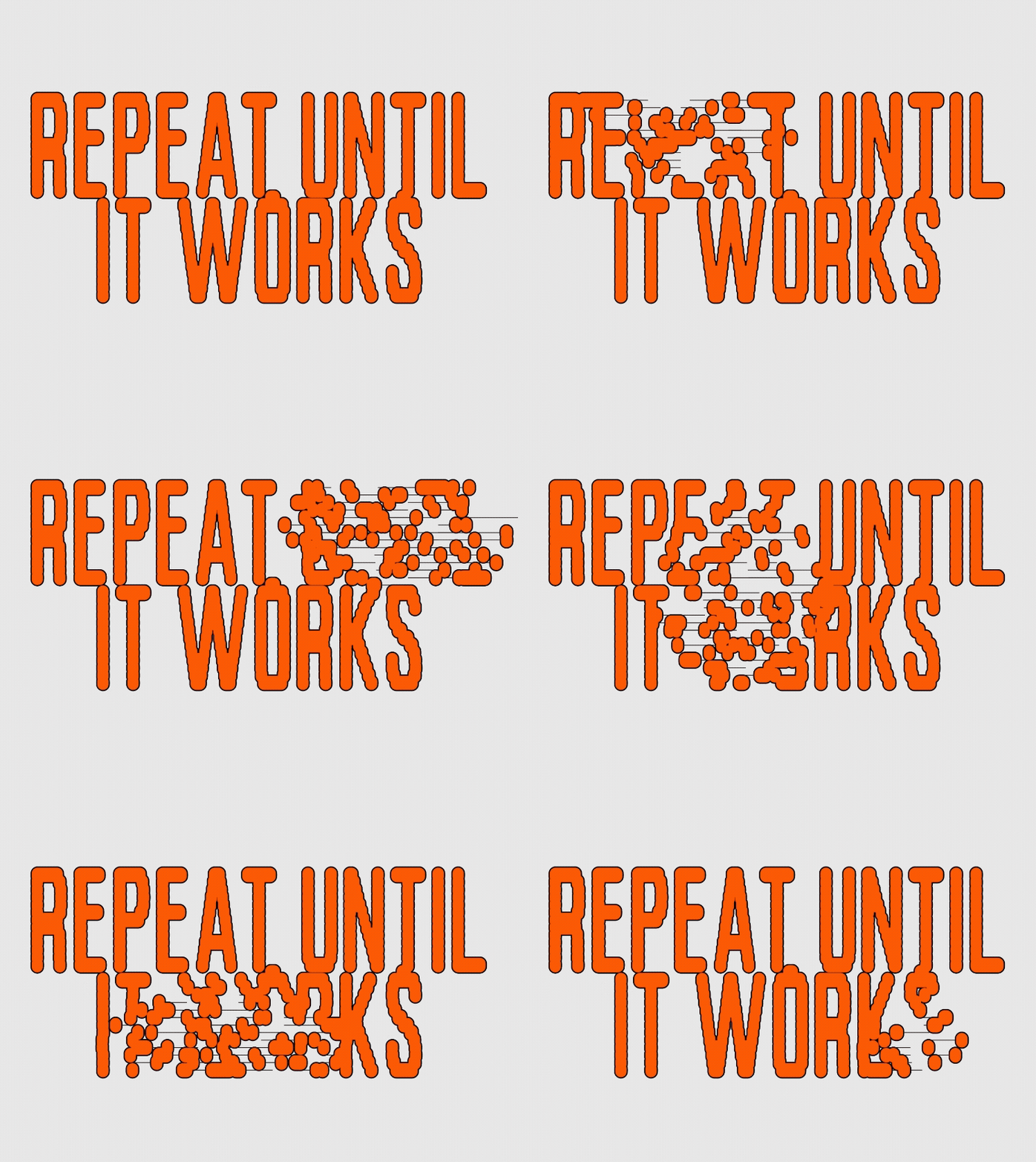
“I think Cavalry has become my favorite tool, it’s the ideal tool for me right now. Text animation in it is incredibly flexible, the opposite of After Effects, where the smallest change can mean starting over from scratch. With Cavalry, I can produce about twenty animations in a single day starting from one base. I don’t think one tool is objectively better than another, it all depends on the person using it and how they think.”
“I think Cavalry has become my favorite tool, it’s the ideal tool for me right now. Text animation in it is incredibly flexible, the opposite of After Effects, where the smallest change can mean starting over from scratch. With Cavalry, I can produce about twenty animations in a single day starting from one base.
I don’t think one tool is better than another, it all depends on the person using it and how they think.”
It’s undeniable, when you work with a tool this experimental, you need to know how to keep up with whatever’s new. Which is actually one of the reasons Antonin told us he’s learned so much from the internet. He admitted he’s afraid of becoming out of touch, though, watching him work, that doesn’t feel like a real risk. But if there’s one thing the internet’s genuinely good for, it’s how much we get to learn from each other. And Antonin Waterkeyn is no exception.
“I do this job because people share their knowledge on the internet. I went to a graphic design school, but there was no dedicated motion design program, I was simply lucky enough to have a one week After Effects workshop in my final year. So I taught myself this craft, and we’re living in an incredible era for the transmission of knowledge, and I simply wouldn’t be doing this job if the internet hadn’t existed. The motion design community is also extremely generous with sharing, probably because everyone learns from everyone else there.
I’ve always been afraid of becoming out of touch, and I think our field demands curiosity about everything, about what’s new, but also about the aesthetics and questions the new generation brings. I never want to become that old guy who keeps saying ‘it was better before.’ Of course, it’s essential to have culture and to know what those who came before us in this field have done, but I hate the idea of staying locked in nostalgia, I think that’s choosing the easy path.”
For the type lovers among us, kinetic typography is where the fun really begins. Most of the time, what a word means to us isn’t just its dictionary definition, and that gets close to Stuart Hall’s whole encoding and decoding thing, but let’s not turn this into a theory lecture. Think about the last time someone said “I’m fine” and you just… knew they weren’t. Same idea. So when we looked at Antonin’s work, we wanted to know how he actually plays with words through motion, and his answer said it all: he just really loves experimenting, full stop.
“To be honest about my personal work, my process rarely starts with meaning. My primary goal is to experiment. I test a huge number of techniques, and once I get a result, I start looking for words or phrases that push that animation a bit further. In a sense, form precedes content in my process.”
We definitely enjoy this experimental style of his. We asked him what he loves most about this field, and honestly, his answer was so simple: there’s just so many different styles out there. Everyone’s doing the same job, but somehow making completely different things. Here, in his own words:
“In recent years, code and generative design have really taken off, and that keeps creating new languages, there are more and more new tools, often free, and these tools create new styles. Actually, I love this field because it’s constantly evolving, it mixes art direction, technique, and technology, which by nature makes it something always in motion. And even though the internet and social media have globalized trends, there are still very different sensibilities from one culture to another.”
There’s something about talking to someone who’s been everywhere in this industry, it just hits different. When we sat down with him, the way he talked through his philosophy on design felt like something we’d been missing for a while, something as simple as it sounds: just having a real conversation about design.