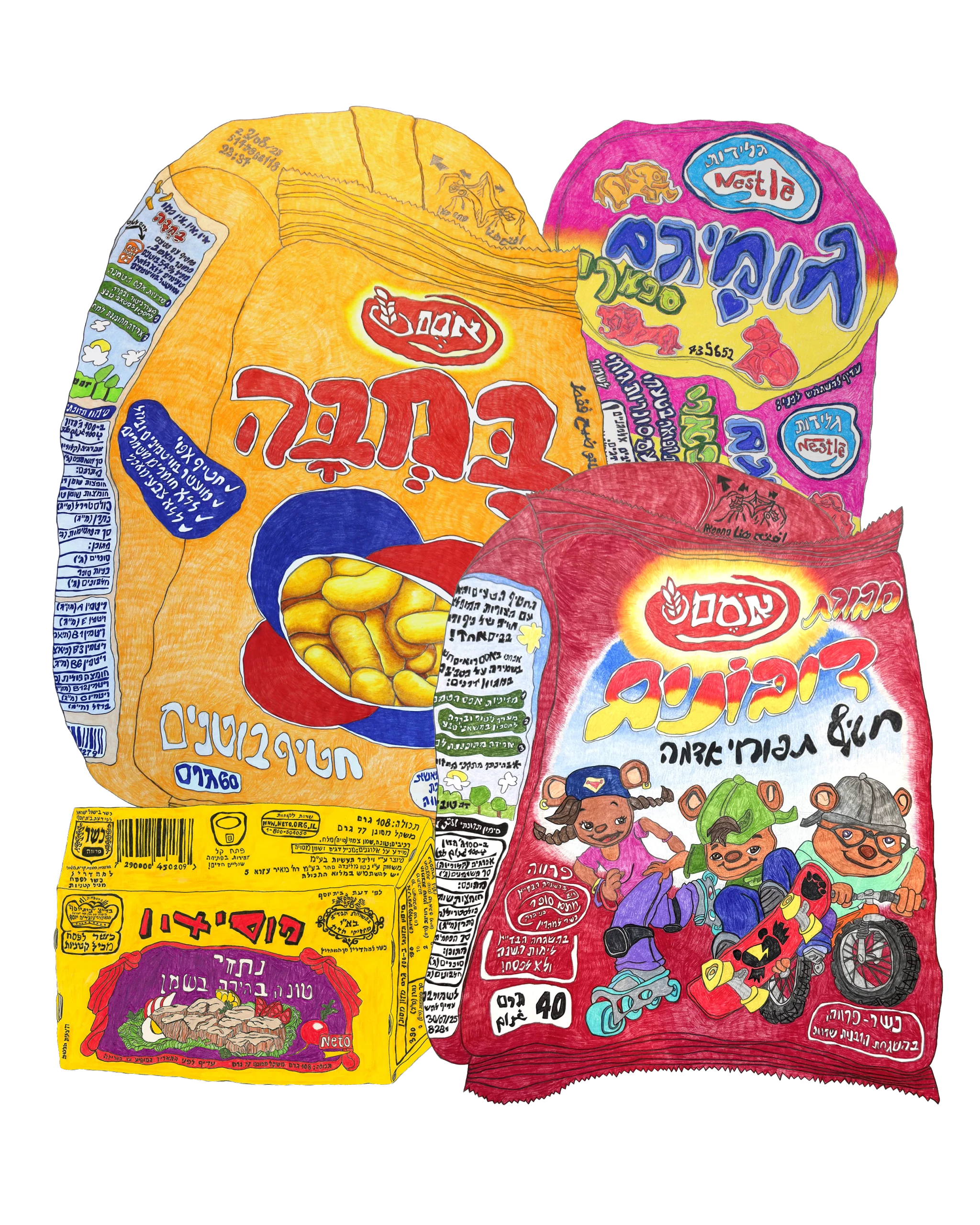
We’re aware of the trend taking over the market right now, childlike drawings, imperfection worn like a badge. But David’s work sits nowhere near that moment. Talk to him for five minutes and the depth behind his style is obvious. Picasso once said every child is an artist, the trick is staying one into adulthood. David seems to have managed exactly that. He’s also just become a father. I honestly can’t wait to see how that shifts things, once his newborn picks up a pen for the first time.
One thing about him: art isn’t a full-time job. By day, there’s another role, rooted in his graphic design background. Branding and advertising, deadlines, systems, work completed to whatever the brand requires, beyond his own taste. Then he clocks out. The laptop light goes dark until the next morning. All that’s left is the pencil and white paper. Just because he’s no longer following “perfect” rules after he clocks out, doesn’t mean it stops bothering him while he focuses on his art. He told us one of the first things he does is draw a random line to destroy the intimidating perfection. That way, nothing’s left to protect.
“What I like about paper is that it makes you commit. On a screen, almost every decision is reversible. You can undo, resize, clean up, duplicate, adjust. On paper, the mark becomes part of the history of the piece. Even when you draw over it, it’s still there in some way. I think that changes how you behave. That feels increasingly important now because so much of visual culture is becoming frictionless. The hand introduces friction again. It slows you down. It makes you negotiate with the material instead of simply controlling it.”
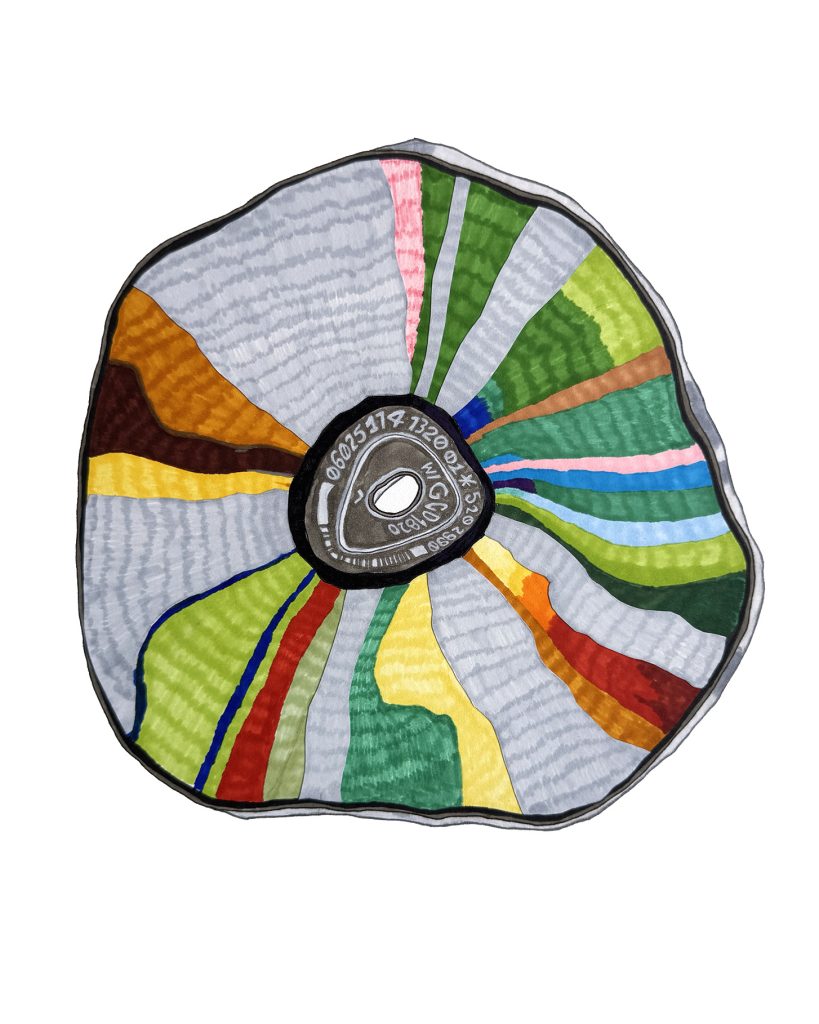
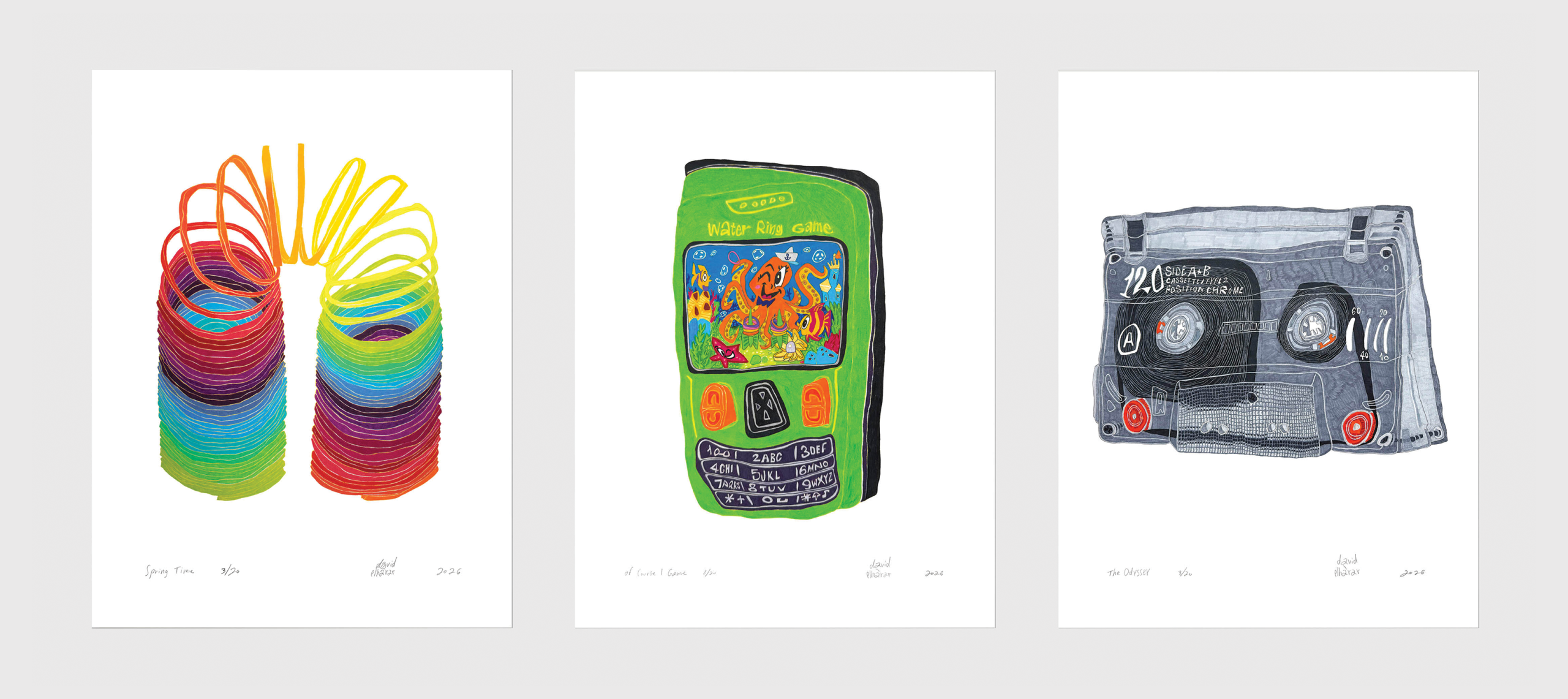
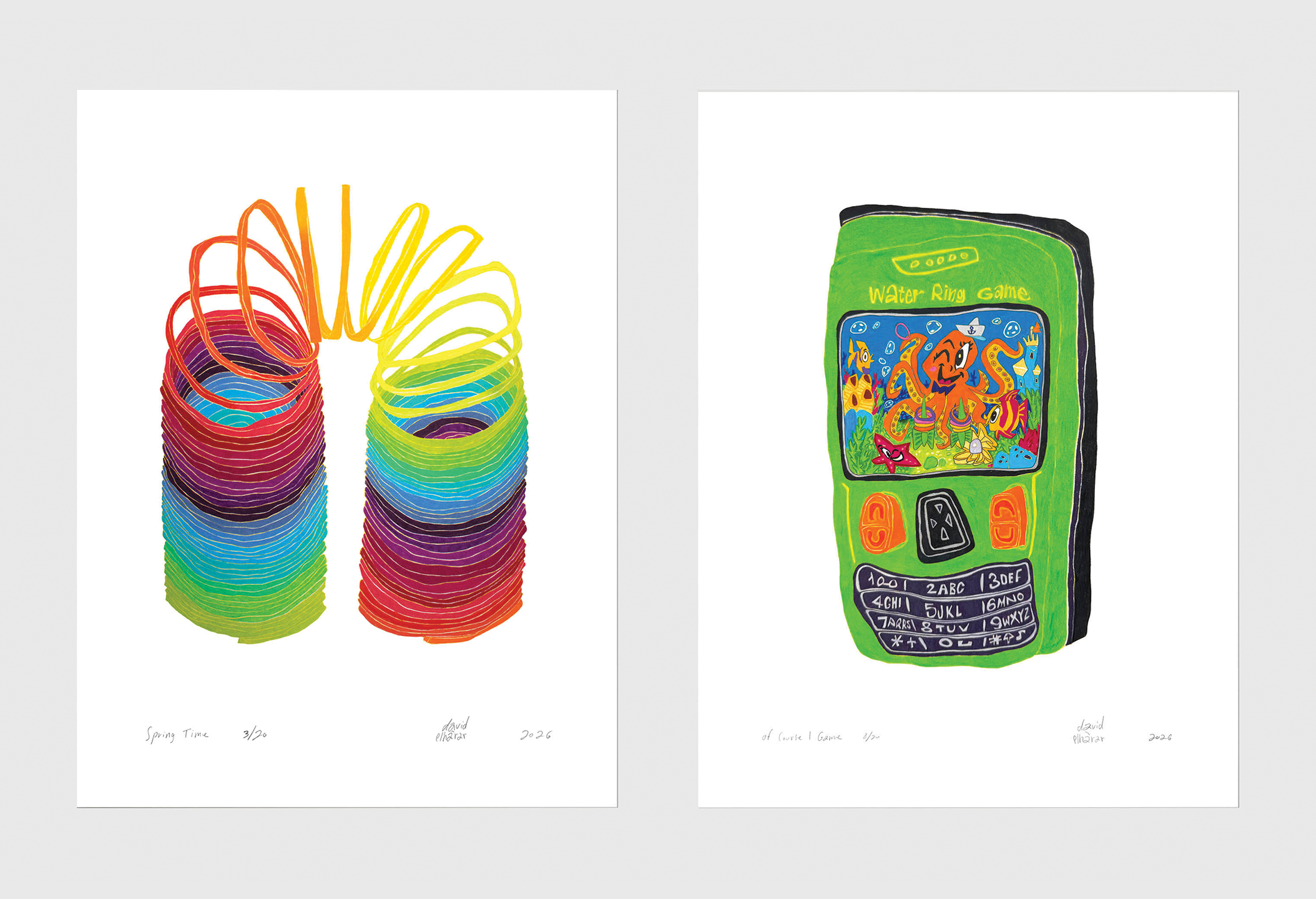
After design school, one lesson tends to land fast: the industry isn’t as tolerant as academia when it comes to a “brilliant” idea. Projects have their own requirements, and there’s someone paying you to get real results. But there’s something even earlier than that. David thinks learning proportion, perspective, anatomy, all these useful systems, can become a kind of censorship. He points out that this isn’t how we draw as children.
“One thing I find fascinating about children’s drawings is that they show us how humans create before we’re trained to create in a certain way. Children don’t initially organise an image according to visual accuracy. They organise it according to importance. The thing that matters becomes bigger. The thing they care about gets more attention. Perspective, proportion and realism come later. At first, the image is almost closer to an emotional map than an optical one.”
His practice evolves into trying to get underneath that training, and reconnect with those childlike instincts. He stops looking closely at the object. Draws with his non-dominant hand. Let the proportions drift instead of fixing them. But don’t mistake this for nostalgia, the kind currently flooding the branding world. What he’s after is something else entirely. He’s interested in the logic behind how children draw. He finds it sincere, and wants to bring that into his own work.
I personally believe there’s a wellness lesson buried in David’s approach, whether he intended it or not. Something close to meditation, in how deliberately he separates the two worlds. Returning to the childhood days is one thing. Knowing when to let go is another. That’s the part that matters most. Take his works. He says the client’s always in the room with him, even when they’re not physically there. However, when sits down with his own art, he stops answering their questions. He starts asking his own.
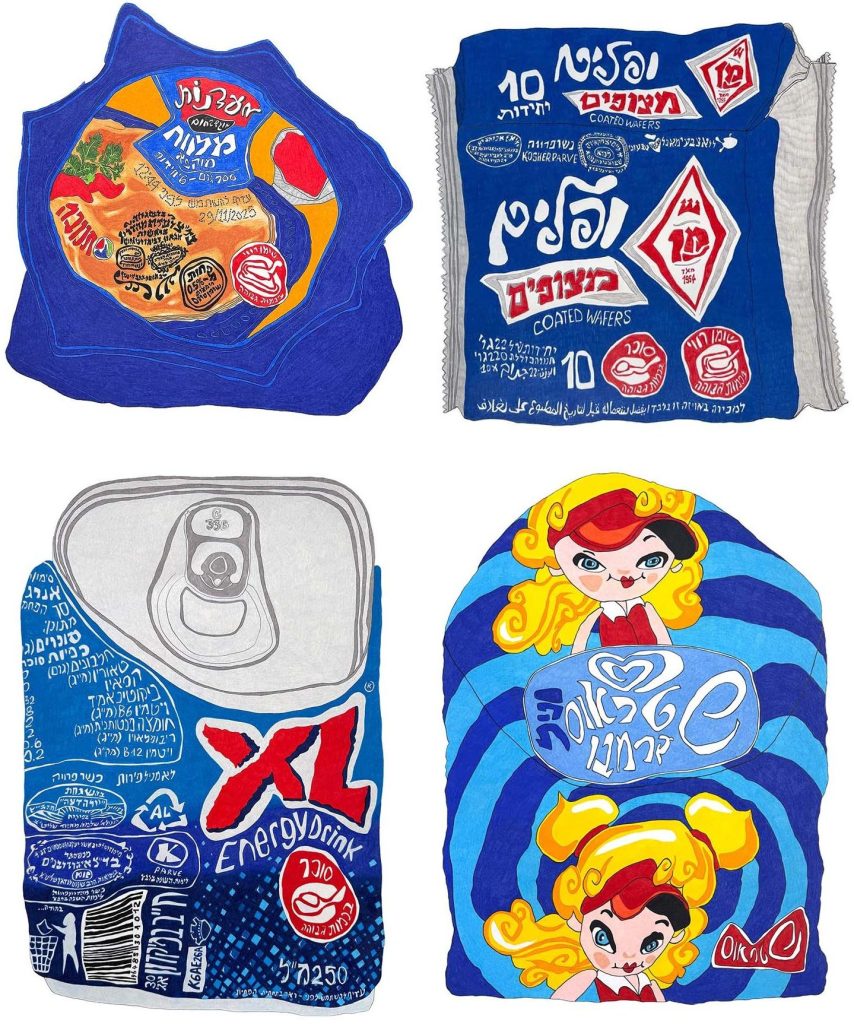
“What I like about paper is that it makes you commit. On a screen, almost every decision is reversible. You can undo, resize, clean up, duplicate, adjust. On paper, the mark becomes part of the history of the piece. Even when you draw over it, it’s still there in some way. I think that changes how you behave. That feels increasingly important now because so much of visual culture is becoming frictionless. The hand introduces friction again. It slows you down. It makes you negotiate with the material instead of simply controlling it.”
After design school, one lesson tends to land fast: the industry isn’t as tolerant as academia when it comes to a “brilliant” idea. Projects have their own requirements, and there’s someone paying you to get real results. But there’s something even earlier than that. David thinks learning proportion, perspective, anatomy, all these useful systems, can become a kind of censorship. He points out that this isn’t how we draw as children.
“One thing I find fascinating about children’s drawings is that they show us how humans create before we’re trained to create in a certain way. Children don’t initially organise an image according to visual accuracy. They organise it according to importance. The thing that matters becomes bigger. The thing they care about gets more attention. Perspective, proportion and realism come later. At first, the image is almost closer to an emotional map than an optical one.”
His practice evolves into trying to get underneath that training, and reconnect with those childlike instincts. He stops looking closely at the object. Draws with his non-dominant hand. Let the proportions drift instead of fixing them. But don’t mistake this for nostalgia, the kind currently flooding the branding world. What he’s after is something else entirely. He’s interested in the logic behind how children draw. He finds it sincere, and wants to bring that into his own work.
I personally believe there’s a wellness lesson buried in David’s approach, whether he intended it or not. Something close to meditation, in how deliberately he separates the two worlds. Returning to the childhood days is one thing. Knowing when to let go is another. That’s the part that matters most. Take his works. He says the client’s always in the room with him, even when they’re not physically there.
However, when sits down with his own art, he stops answering their questions. He starts asking his own.
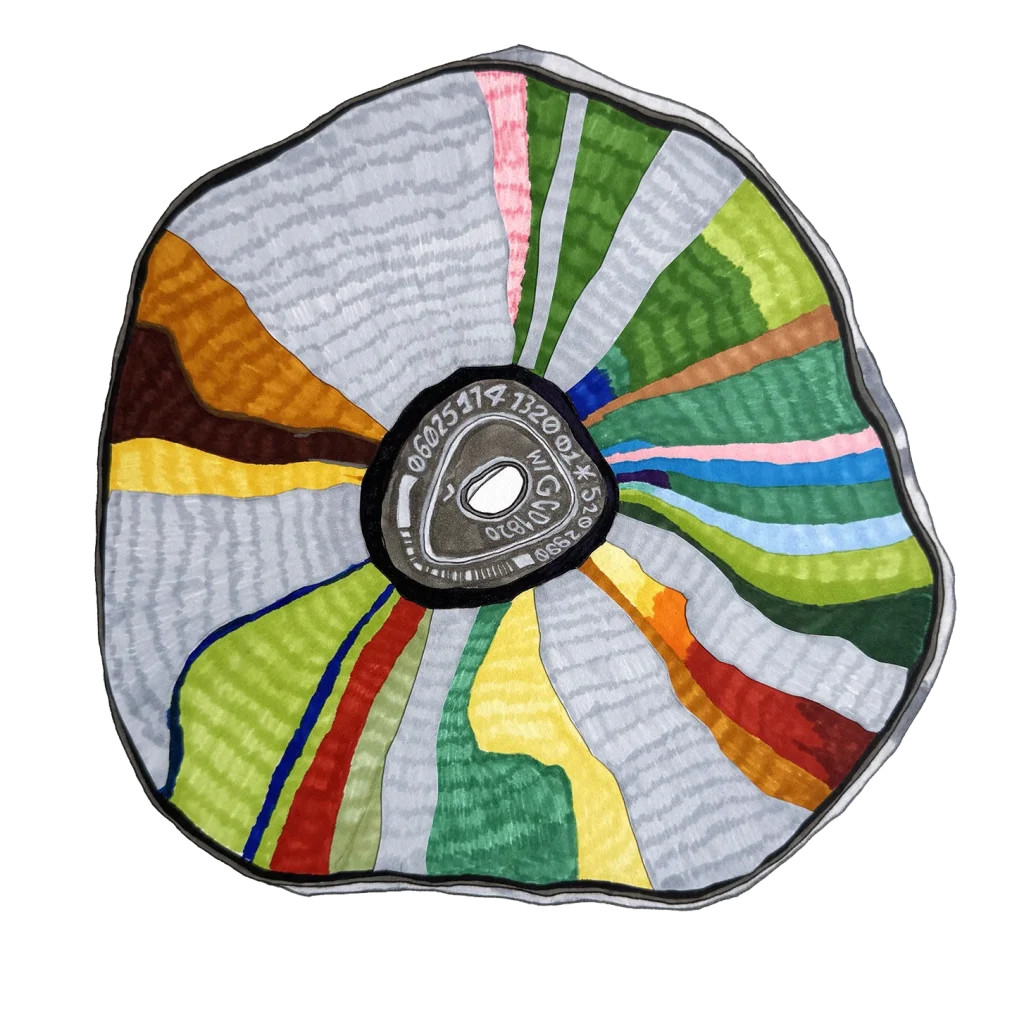
“Imperfection taught me that resemblance isn’t necessarily the goal. Sometimes a drawing becomes more truthful when it becomes less correct. Professionally, though, precision taught me something equally important: that care, clarity and discipline are their own kind of respect. I need both. I just try not to let one flatten the other.”
One thing is clear up to this point: David follows his instincts. So it’s no surprise that in the future he’s going to run a few experiments. He told us he’s curious about what happens when drawings become objects rather than just images. That’s the direction he’s headed now, bigger, physically, with new materials, pushing the visual language past the flat surface.
Just because he’s creating doesn’t mean we all get to have it. No surprise there. His work brings back something from childhood. And there’s one feeling in particular we might have forgotten: the toy we wanted so badly, yet our parents wouldn’t let us have it. He’s very interested in scarcity, especially nowadays, when everything can be reached with one click and reproduced endlessly. As he tries to create accessibility for his work, he’s not ready to let go of that sense of scarcity.
Let’s say I also have those childlike instincts as well. I’m pretty sure we’re going to talk more about David Elharar in the future.
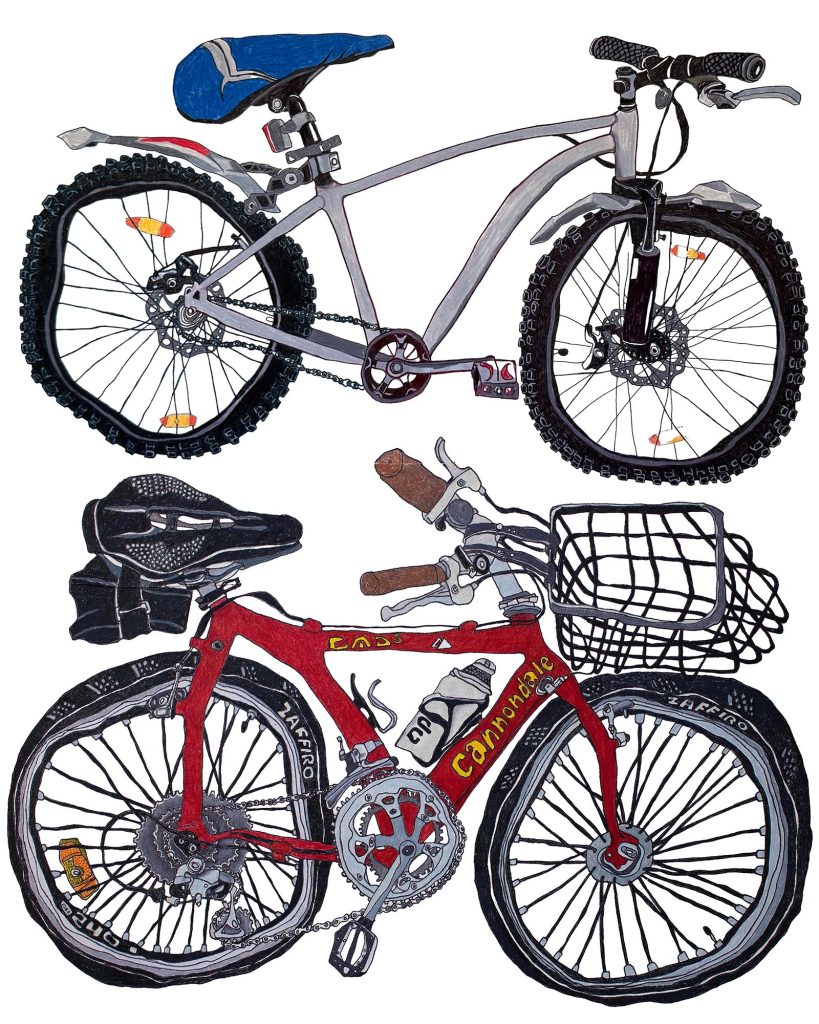
“Imperfection taught me that resemblance isn’t necessarily the goal. Sometimes a drawing becomes more truthful when it becomes less correct. Professionally, though, precision taught me something equally important: that care, clarity and discipline are their own kind of respect. I need both. I just try not to let one flatten the other.”
One thing is clear up to this point: David follows his instincts. So it’s no surprise that in the future he’s going to run a few experiments. He told us he’s curious about what happens when drawings become objects rather than just images. That’s the direction he’s headed now, bigger, physically, with new materials, pushing the visual language past the flat surface.
Just because he’s creating doesn’t mean we all get to have it. No surprise there. His work brings back something from childhood. And there’s one feeling in particular we might have forgotten: the toy we wanted so badly, yet our parents wouldn’t let us have it. He’s very interested in scarcity, especially nowadays, when everything can be reached with one click and reproduced endlessly. As he tries to create accessibility for his work, he’s not ready to let go of that sense of scarcity.
Let’s say I also have those childlike instincts as well. I’m pretty sure we’re going to talk more about David Elharar in the future.