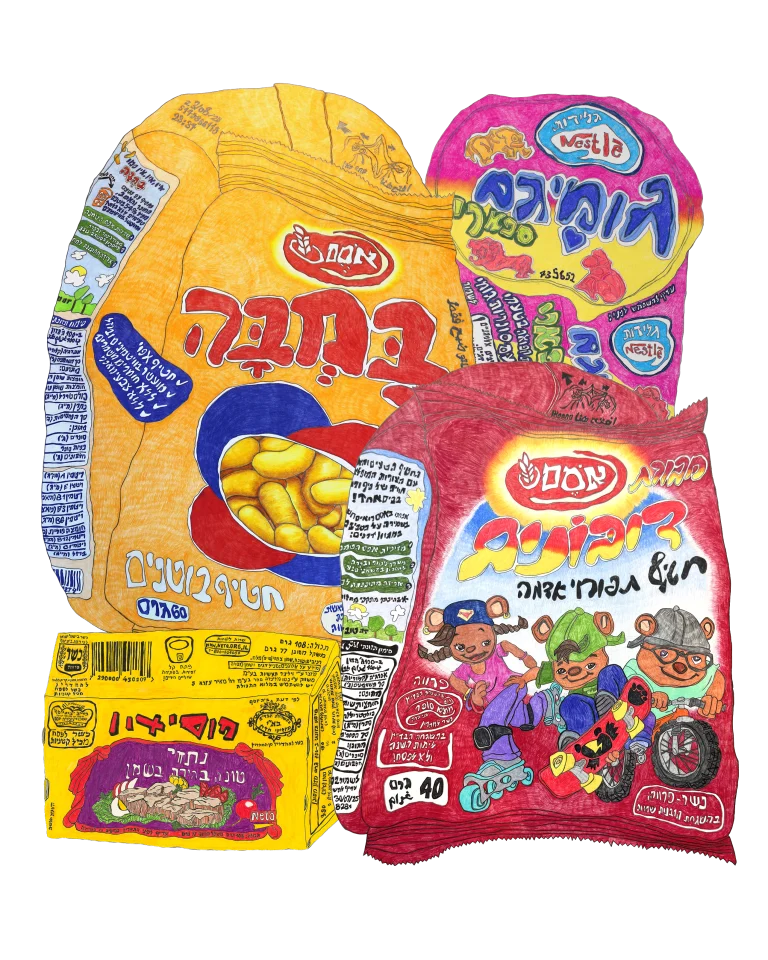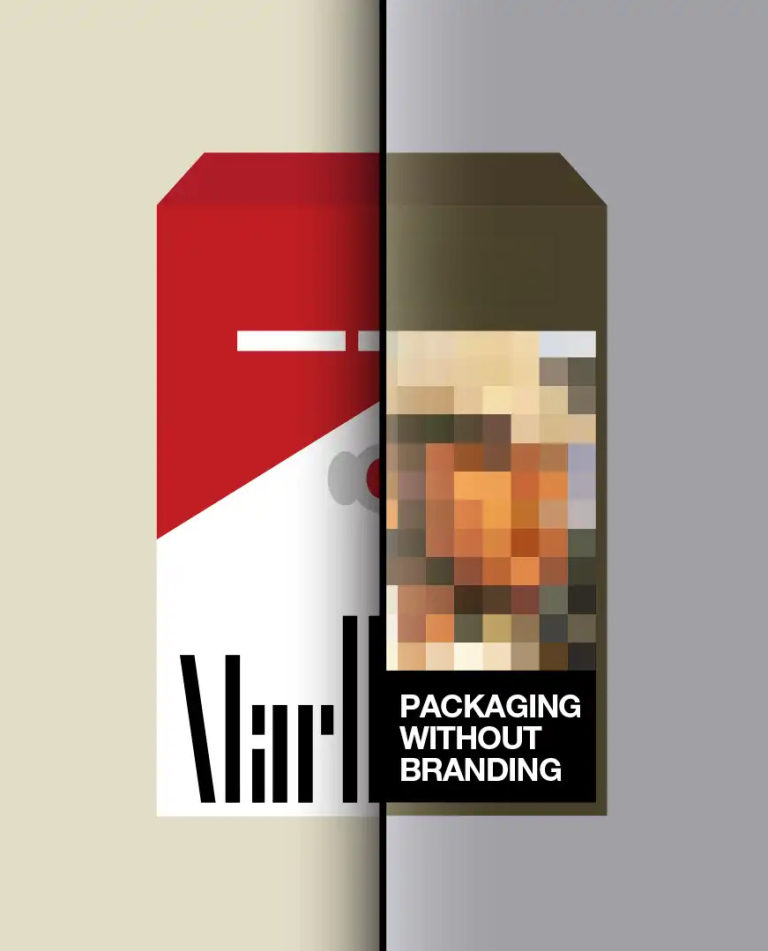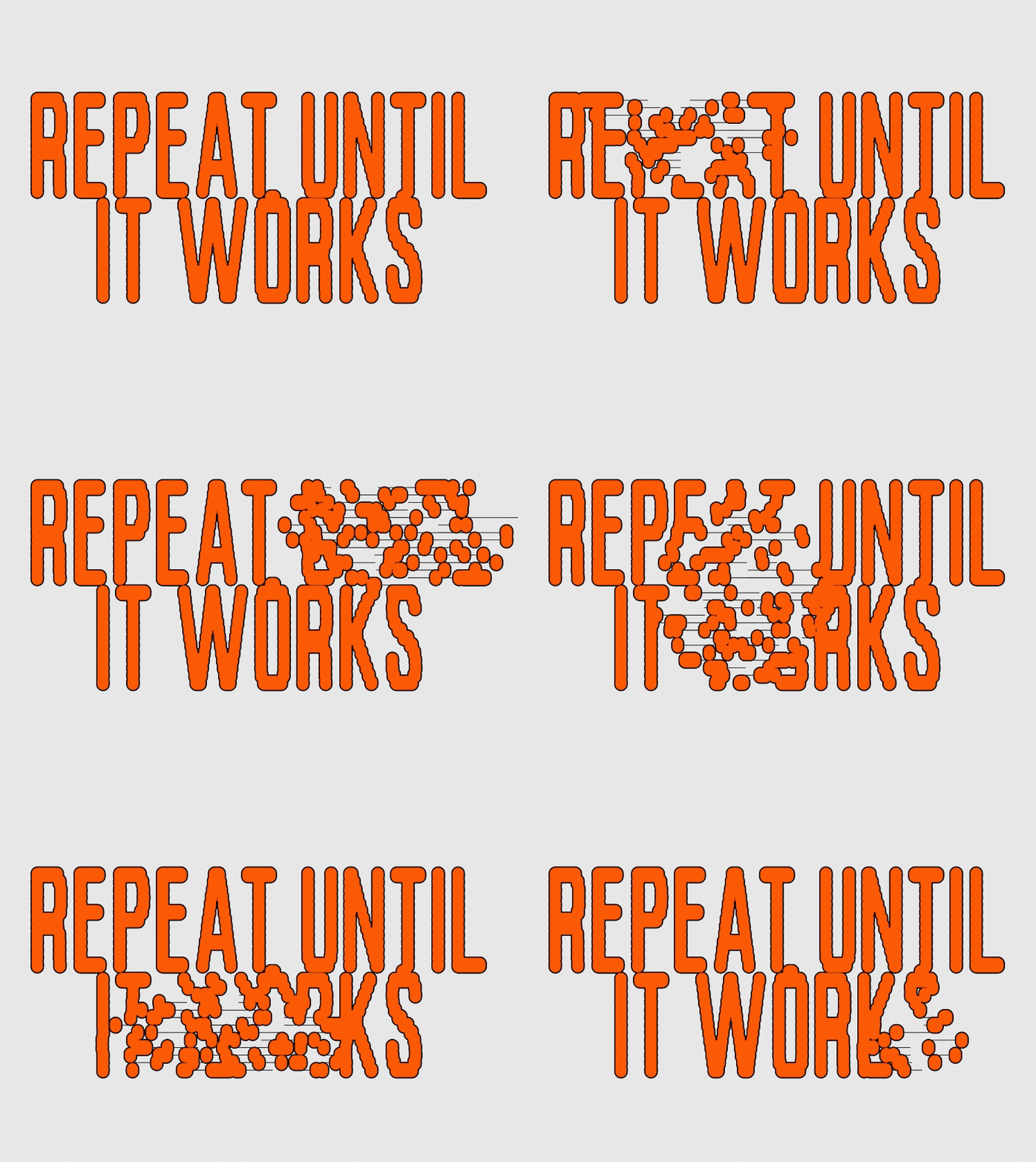
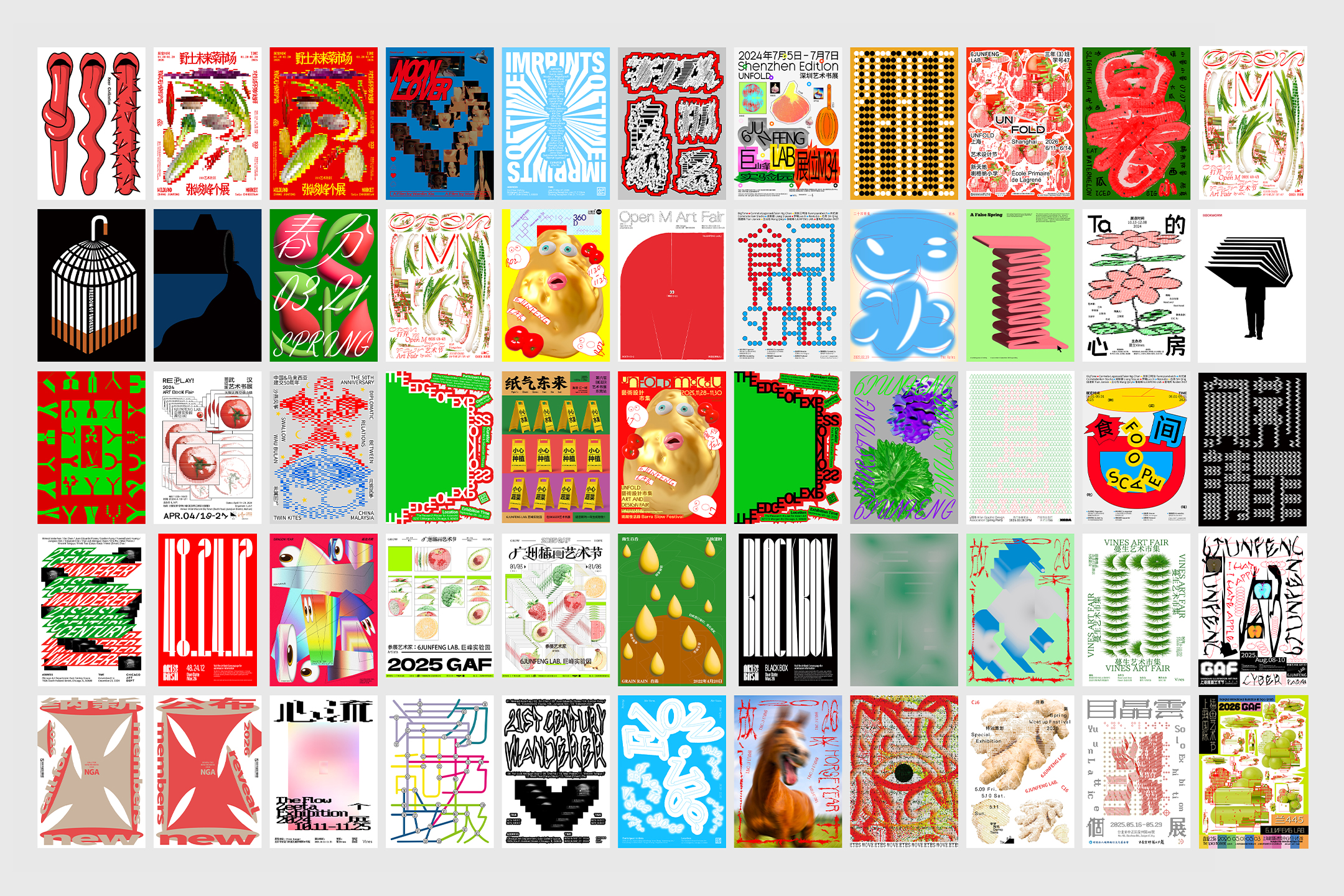
Junfeng’s visual language has travelled almost as much as he has. Dublin introduced him to structure, order, typography, and the logic of Western design education. Chicago loosened things up. At the School of the Art Institute of Chicago, he moved between media, personal narratives, and conceptual experiments, discovering that design did not always need to arrive with an answer. Sometimes, asking the right question was enough.
Now in Macau, Junfeng is looking closer to home and closer at the things most of us barely notice. The city’s Chinese and Western influences, colonial traces, tourist spectacle, crowded streets, and shifting urban landscape have become part of his visual vocabulary. Still, this is not simply an East-meets-West story.
“My visual language is neither a reproduction of a single culture nor a simple accumulation of Eastern and Western visual elements. It is more like an ongoing process of translation, deconstruction, and reconstruction.”
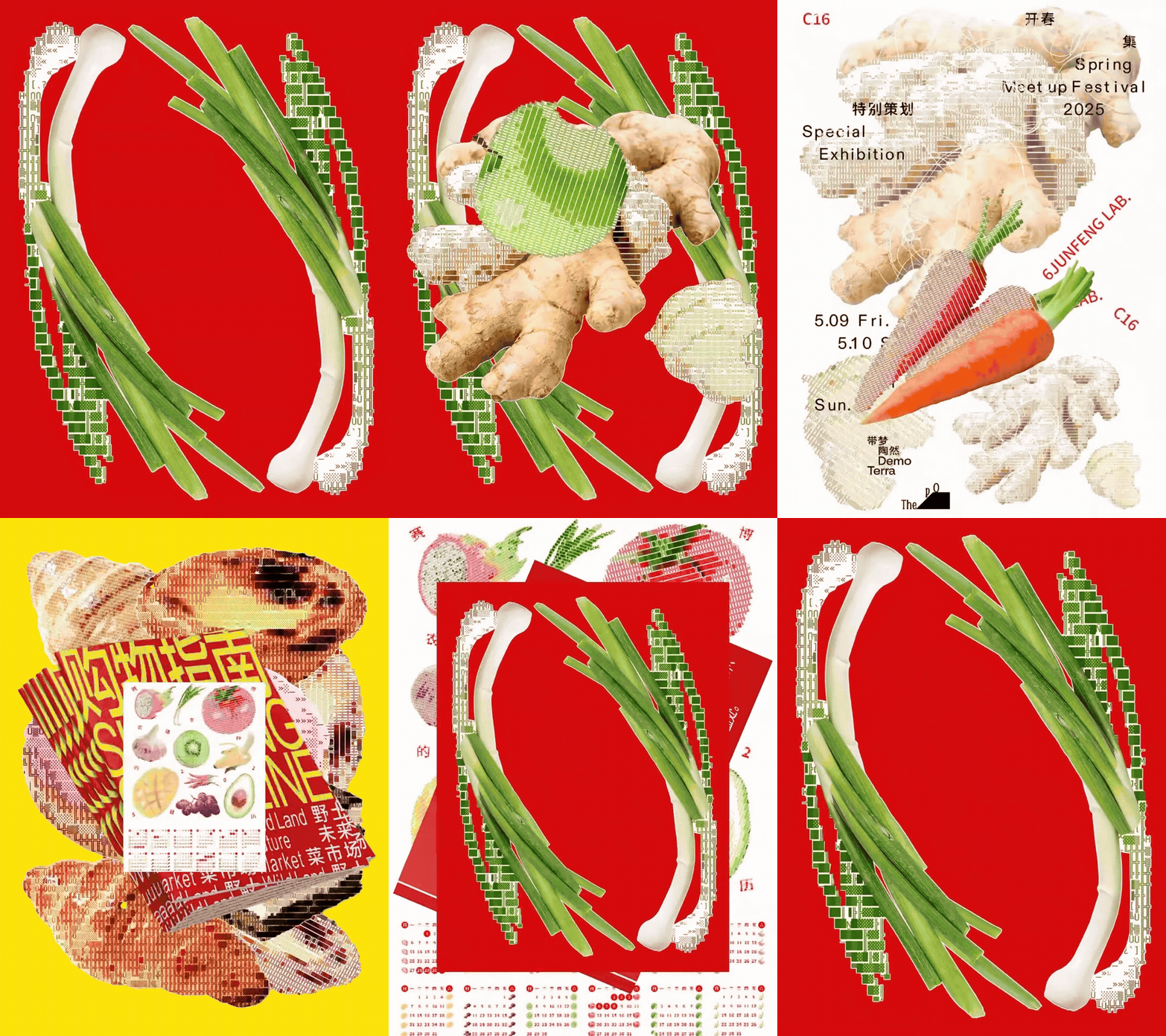
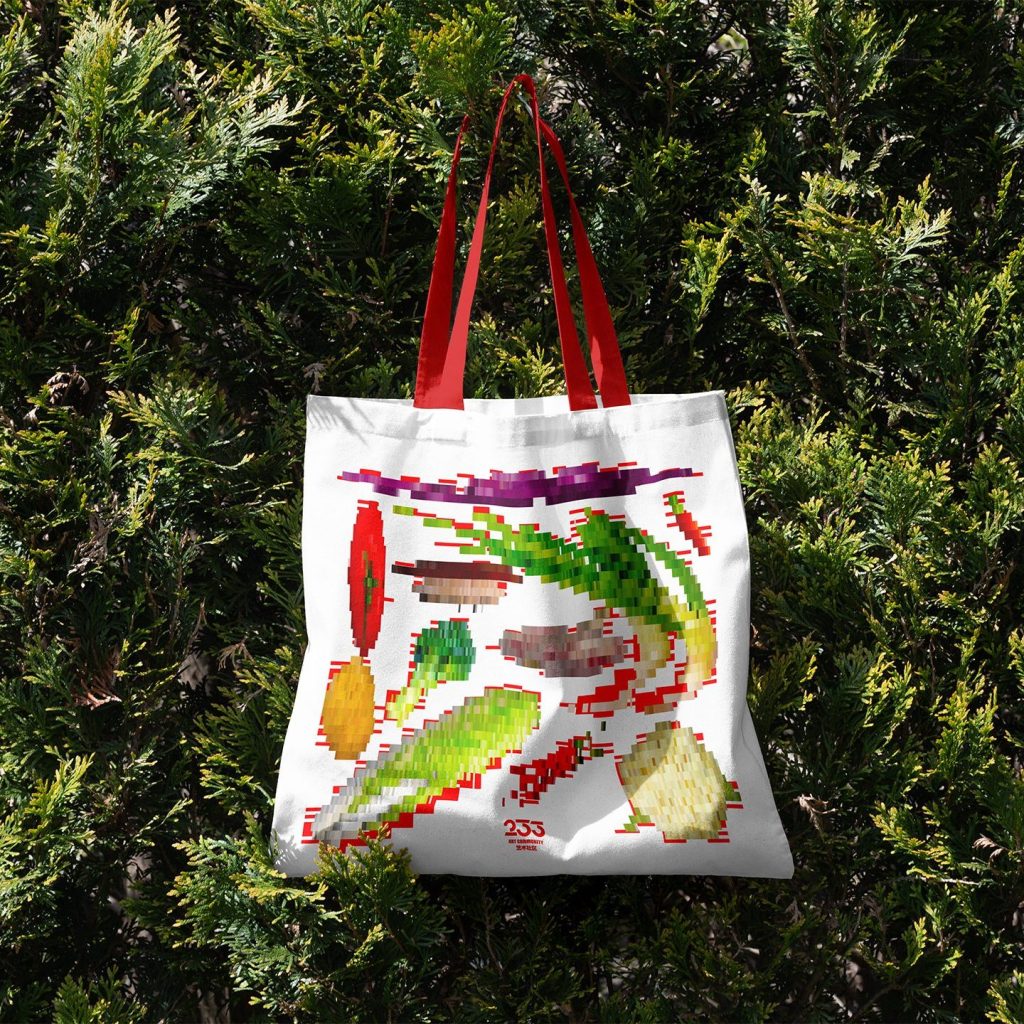
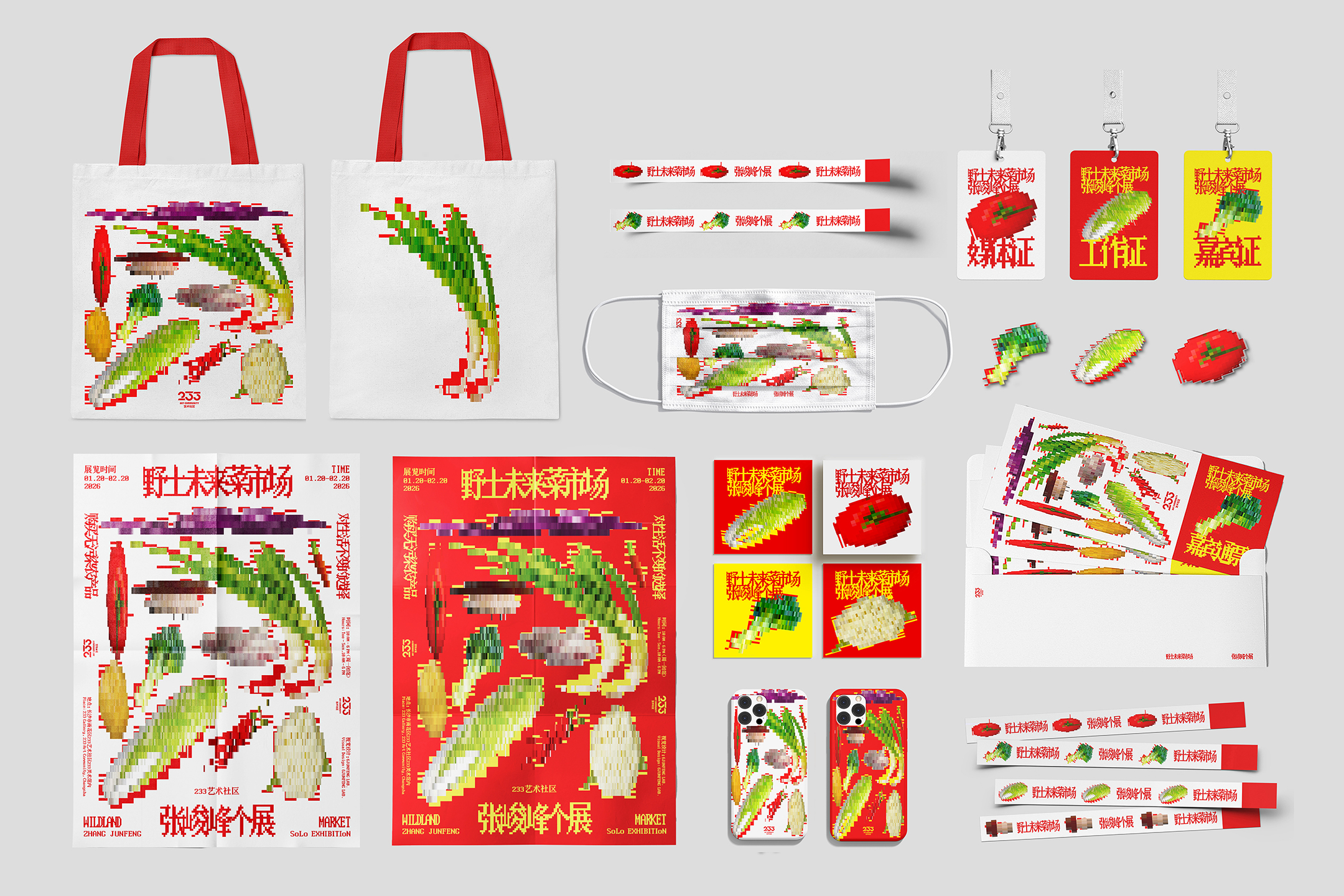
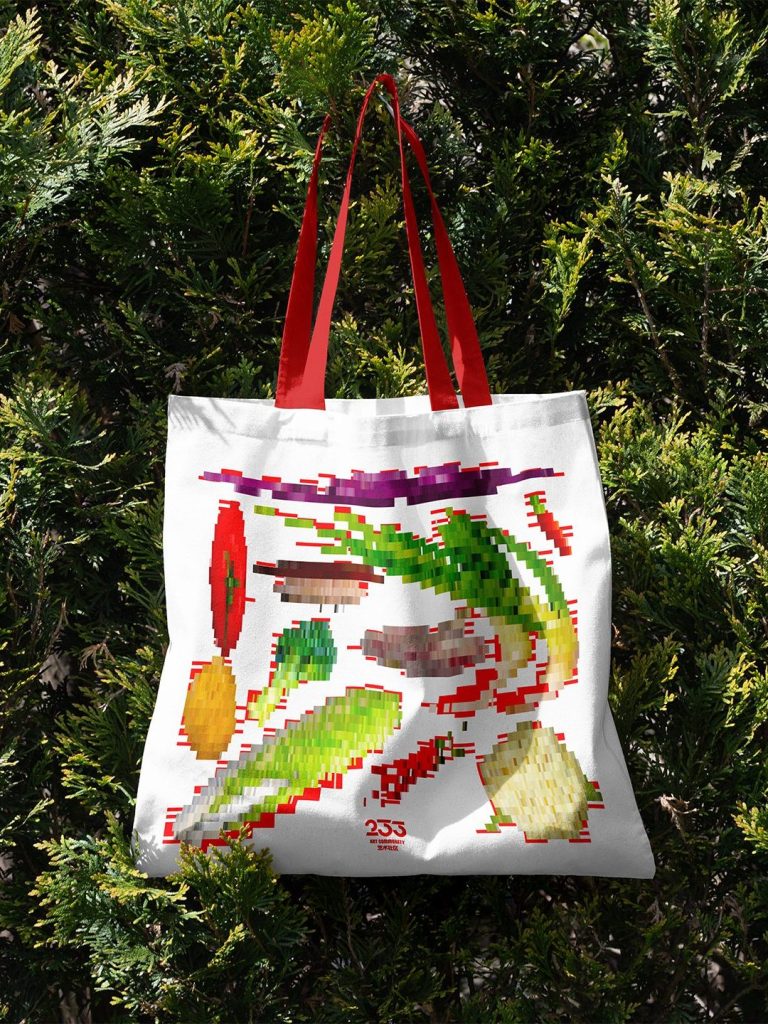
He starts with the fruits and vegetables we see every day, then reconstructs them through pixelation, character-based shapes, and digital imagery. The results still look like food, technically, but something’s off. Distorted. Unfamiliar. Almost like it was generated, not grown. What began as a project about food we barely think twice about ended up somewhere much bigger, land, climate, how we consume things, the digital systems running underneath all of it without us really noticing. And more importantly, what our food might actually turn into in the future.
“Today, the way we understand food is becoming less like understanding a living organism that grows from the soil, and more like understanding a symbol that has been informatized and commodified. We encounter food through phone screens, delivery platforms, advertising images, social media, and algorithmic recommendations. Food is no longer just food; it has also become an image and a form of data. So in Cyber Farm, the future I imagine is not a distant science-fiction world, but a reality that is already unfolding.”
He adds that while the work involves a degree of imagination, it may not be entirely imagined, since we already live in a world where we experience nature through images, commodities, and data. Cyber Farm simply makes this visible, pushing today’s conditions to the point where they become more absurd and more apparent. What really interests him, he says, is the tension between the familiar and the strange.
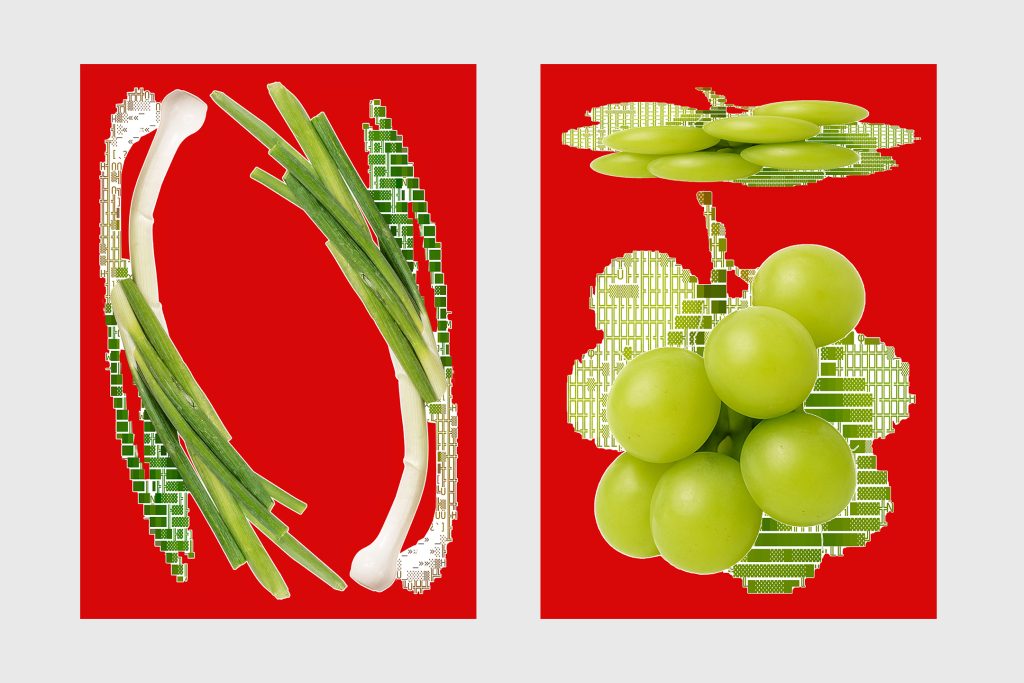
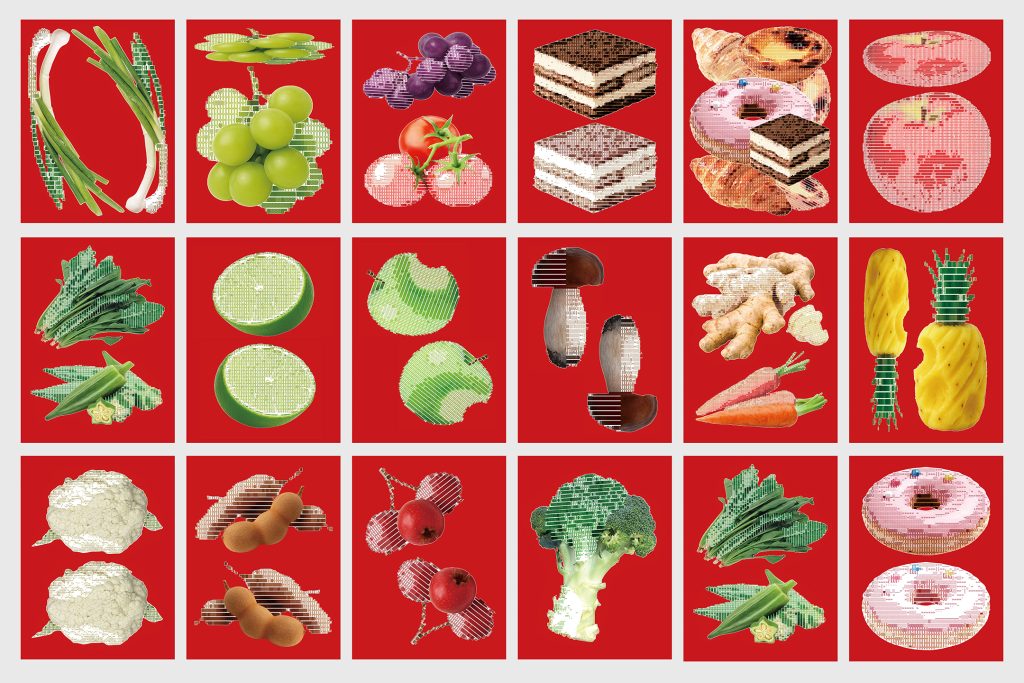
He starts with the fruits and vegetables we see every day, then reconstructs them through pixelation, character-based shapes, and digital imagery. The results still look like food, technically, but something’s off. Distorted. Unfamiliar. Almost like it was generated, not grown. What began as a project about food we barely think twice about ended up somewhere much bigger, land, climate, how we consume things, the digital systems running underneath all of it without us really noticing. And more importantly, what our food might actually turn into in the future.
“Today, the way we understand food is becoming less like understanding a living organism that grows from the soil, and more like understanding a symbol that has been informatized and commodified. We encounter food through phone screens, delivery platforms, advertising images, social media, and algorithmic recommendations. Food is no longer just food; it has also become an image and a form of data. So in Cyber Farm, the future I imagine is not a distant science-fiction world, but a reality that is already unfolding.”
He adds that while the work involves a degree of imagination, it may not be entirely imagined, since we already live in a world where we experience nature through images, commodities, and data. Cyber Farm simply makes this visible, pushing today’s conditions to the point where they become more absurd and more apparent. What really interests him, he says, is the tension between the familiar and the strange.
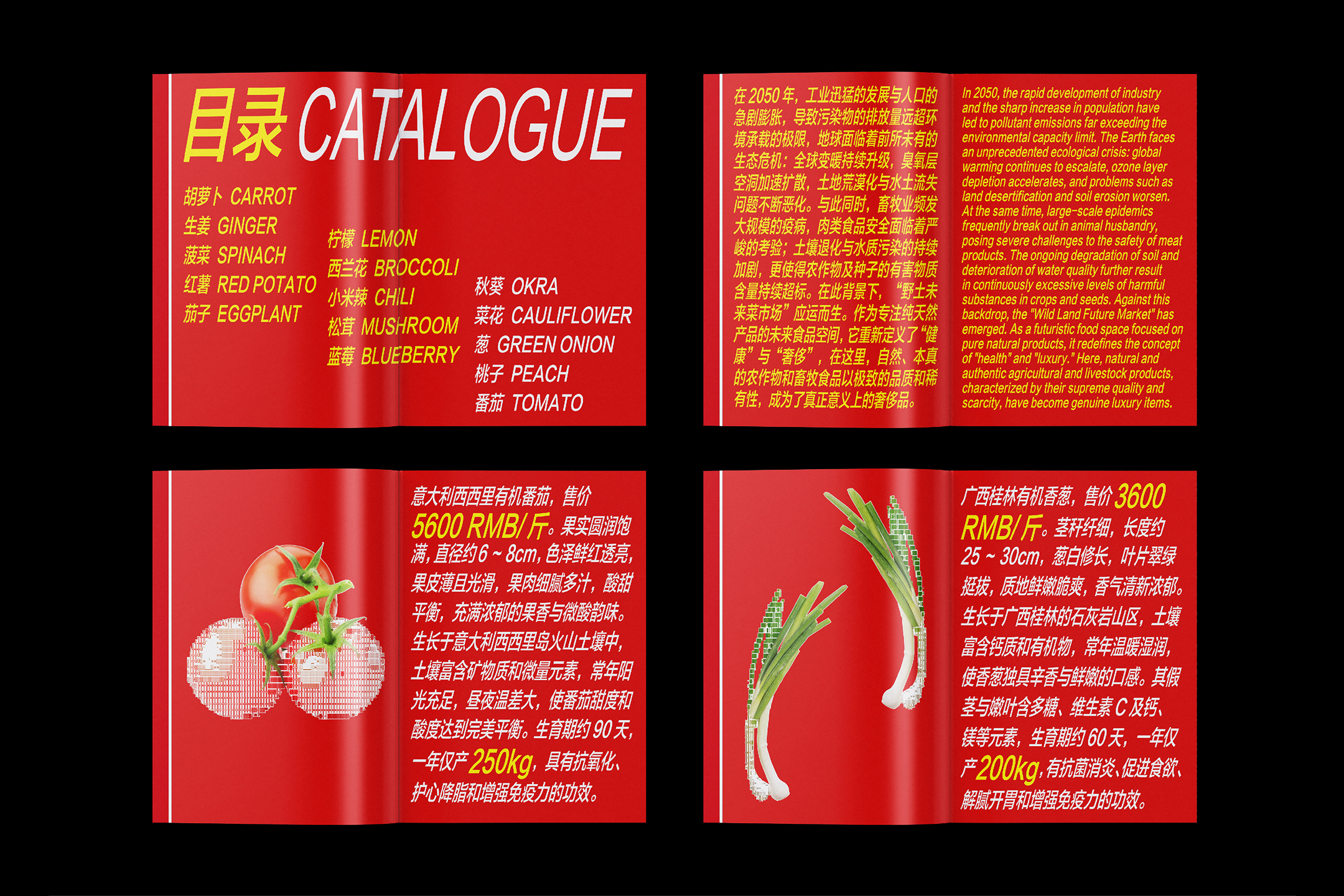
Let’s be clear: Zhang’s vision of the future was never going to stop at Cyber Farm. Wildland Future Market – Shopping Guide takes it somewhere stranger and, against the backdrop of today’s ecological and food crises, somehow unsettlingly possible. Which is exactly why it’s a little scary how much we like his work. Hopefully, though, we’ll never actually live in a world where a tomato costs more than our rent. Here’s how he describes the market he imagined:
“The form of a ‘shopping guide‘ gradually emerged from this idea. A guide usually has a very everyday tone. It seems to offer knowledge and practical help. But when this format is placed within the context of an absurd future market, it creates a strong contrast. Suddenly, even buying a vegetable or understanding a piece of fruit requires the careful reading of something like a product manual. At the same time, by reconstructing the forms of food and adding absurd descriptions, I wanted to create a sense of cognitive dislocation.”
He admits that pricing a tomato at around 8,000 dollars might seem funny at first, but then he asks: what if it actually becomes real? From there, he invites us to rethink our relationship with nature. Beyond Cyber Farm and Wildland Future Market – Shopping Guide, Zhang’s wider practice begins with the objects and environments most of us overlook. Rather than searching for inspiration in distant worlds, he finds it in the unstable realities already surrounding him:
“My life in Macau over the past few years, and its urban environment, have also given me a lot of inspiration. It has a history of cultural overlap between China and the West, and it is also a city of tourism, consumption, and high density. At the same time, this region is constantly undergoing land reclamation, continuously changing the boundaries of the city. I am also very interested in these spaces that are disappearing or being reconstructed.”
This attention to change, disappearance, and reconstruction runs through even the smallest materials he collects:
“For example, a banana, through the process of decay, was transformed by me into a carrier for recording the death of language; a blackened leaf left its final trace under several tons of pressure; a fragment of construction material collected from Hac Sa Beach may simultaneously point to nature, land reclamation, urban memory, human activity, and so on.”
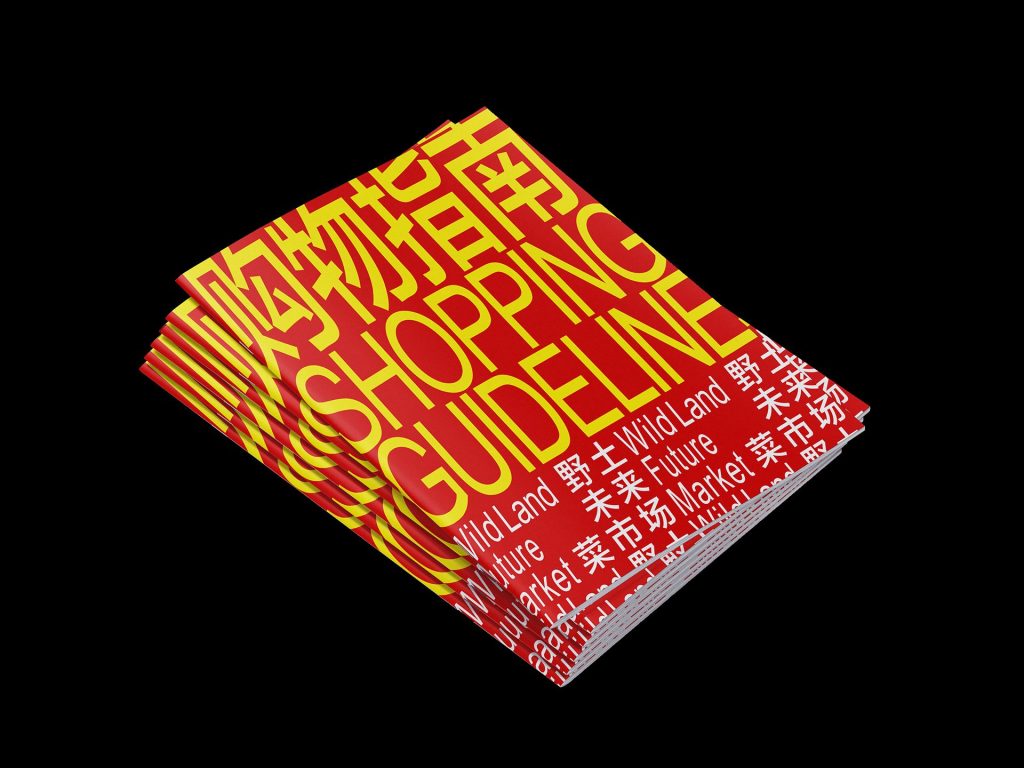
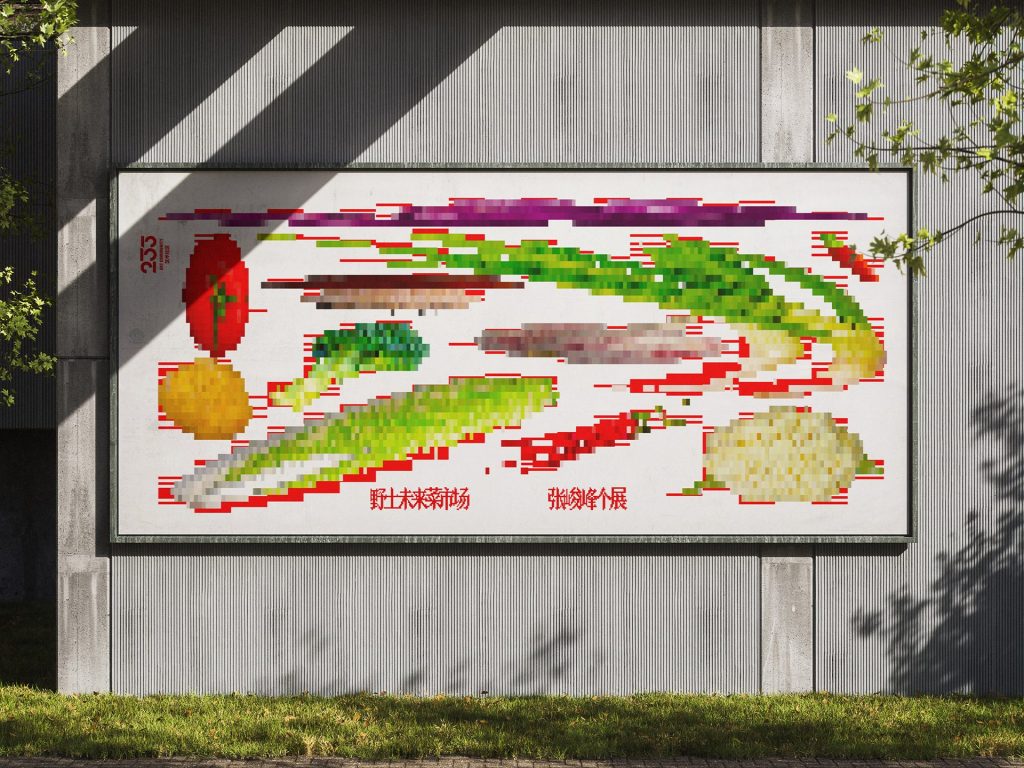
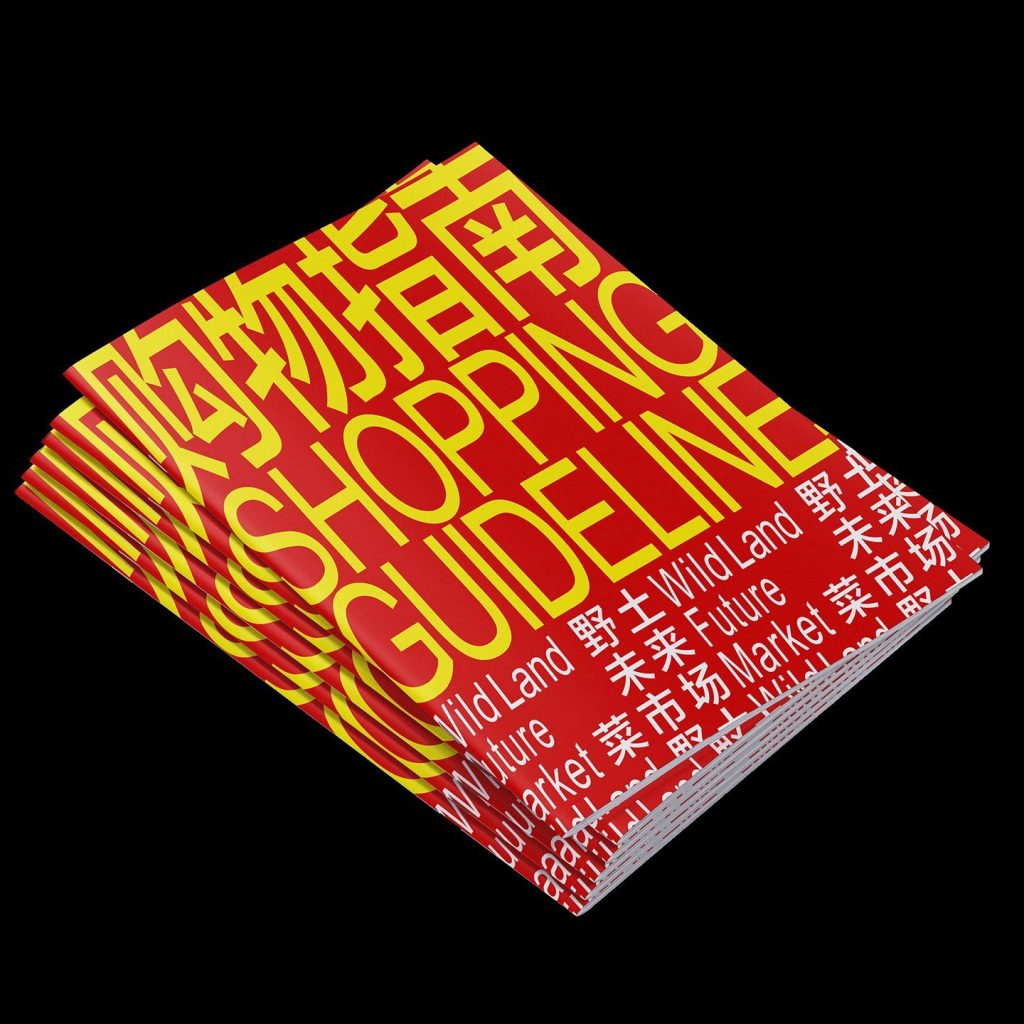
Let’s be clear: Zhang’s vision of the future was never going to stop at Cyber Farm. Wildland Future Market – Shopping Guide takes it somewhere stranger and, against the backdrop of today’s ecological and food crises, somehow unsettlingly possible. Which is exactly why it’s a little scary how much we like his work. Hopefully, though, we’ll never actually live in a world where a tomato costs more than our rent. Here’s how he describes the market he imagined:
“The form of a ‘shopping guide‘ gradually emerged from this idea. A guide usually has a very everyday tone. It seems to offer knowledge and practical help. But when this format is placed within the context of an absurd future market, it creates a strong contrast. Suddenly, even buying a vegetable or understanding a piece of fruit requires the careful reading of something like a product manual. At the same time, by reconstructing the forms of food and adding absurd descriptions, I wanted to create a sense of cognitive dislocation.”
He admits that pricing a tomato at around 8,000 dollars might seem funny at first, but then he asks: what if it actually becomes real? From there, he invites us to rethink our relationship with nature. Beyond Cyber Farm and Wildland Future Market – Shopping Guide, Zhang’s wider practice begins with the objects and environments most of us overlook. Rather than searching for inspiration in distant worlds, he finds it in the unstable realities already surrounding him:
“My life in Macau over the past few years, and its urban environment, have also given me a lot of inspiration. It has a history of cultural overlap between China and the West, and it is also a city of tourism, consumption, and high density. At the same time, this region is constantly undergoing land reclamation, continuously changing the boundaries of the city. I am also very interested in these spaces that are disappearing or being reconstructed.”
This attention to change, disappearance, and reconstruction runs through even the smallest materials he collects:
“For example, a banana, through the process of decay, was transformed by me into a carrier for recording the death of language; a blackened leaf left its final trace under several tons of pressure; a fragment of construction material collected from Hac Sa Beach may simultaneously point to nature, land reclamation, urban memory, human activity, and so on.”
Reality check, inside the industry
The design world’s only getting more complicated. And as Zhang told us, freelancing can be a genuinely lonely place to be in. A lot of us go into freelancing expecting freedom, and then find out the reality is a lot less stable than that. Since Junfeng’s freelance himself, we figured it was worth actually talking about that side of things.
“If I have an unpopular opinion, it is that freelancing is not necessarily more free than working in a studio or company. Many freelancers are actually still controlled by clients, cash flow, social media, awards, and market expectations. Real freedom is not the absence of limitations, but the ability to gradually build your own system of judgment: knowing why you accept a project, why you reject one, and why you continue to insist on certain creative practices that may not seem immediately ‘efficient’.”
Reality check, inside the industry
The design world’s only getting more complicated. And as Zhang told us, freelancing can be a genuinely lonely place to be in. A lot of us go into freelancing expecting freedom, and then find out the reality is a lot less stable than that. Since Junfeng’s freelance himself, we figured it was worth actually talking about that side of things.
“If I have an unpopular opinion, it is that freelancing is not necessarily more free than working in a studio or company. Many freelancers are actually still controlled by clients, cash flow, social media, awards, and market expectations. Real freedom is not the absence of limitations, but the ability to gradually build your own system of judgment: knowing why you accept a project, why you reject one, and why you continue to insist on certain creative practices that may not seem immediately ‘efficient’.”
One thing almost all of us end up dealing with, whether we’re freelancers or part of a studio, is awards and competitions. We know you’ve spent countless nights writing award submissions, polishing project summaries, and waiting for the results. Junfeng Zhang has won more than 100 awards from around the world, so he knows the process inside out. And as we all know, it’s never an easy ride, the award circuit comes with its own highs and lows, plus plenty of bias along the way.
At first, it was mostly about credibility, testing his work, getting it in front of an international audience for him. And it worked. As he entered more competitions, they became something more too, a way into publications, exhibitions, clients, collaborations, collections, interviews, even new creative opportunities.
Whether it’s freelancing or our future shopping cart, the world is complex enough. Let’s hope Junfeng’s message lands, so we never end up paying a fortune for a single vegetable.
One thing almost all of us end up dealing with, whether we’re freelancers or part of a studio, is awards and competitions. We know you’ve spent countless nights writing award submissions, polishing project summaries, and waiting for the results. Junfeng Zhang has won more than 100 awards from around the world, so he knows the process inside out. And as we all know, it’s never an easy ride, the award circuit comes with its own highs and lows, plus plenty of bias along the way.
At first, it was mostly about credibility, testing his work, getting it in front of an international audience for him. And it worked. As he entered more competitions, they became something more too, a way into publications, exhibitions, clients, collaborations, collections, interviews, even new creative opportunities.
Whether it’s freelancing or our future shopping cart, the world is complex enough. Let’s hope Junfeng’s message lands, so we never end up paying a fortune for a single vegetable.