So many of you reading this either ran away from an agency, or you’re planning your exit. Fair enough. Agency culture is pretty much the same everywhere you go. Brutal workloads, long hours, low pay. Bad behavior dressed up as “creative genius.” And of course, the classic midday crisis during lunch. The solution seems clear: find a creative studio with clients you actually want and coworkers who get you, or go freelance. However, is freelance really all about sunshine or is it a different kind of storm?
We’re not here to deny what freelancing can bring to the table. It’s true, you get complete authority over your working hours, your schedule, the brands and clients you work with. But with great power comes great responsibility. You need to be your own biggest support system, your entire marketing team, occasionally HR, and definitely your own account manager. And if you’re jumping into freelancing without a strong network, good resources, and an emergency fund for at least three to six months, we’re sorry, but you’re doomed.
Award-winning graphic designer Ben Hannam is being honest about it in his book, A Graphic Design Student’s Guide to Freelance. According to him, freelancing is about weighing risk against reward. No safety net, no protection from academia anymore. All the wins and losses belong to you. But it’s not all bad news. He says if you’ve got a client once, you can do it again, even if you failed in the meantime.
If you’re reading this while you’re still in school, you’re kind of lucky. This is one of the best times to actually try freelancing, when the financial pressure is lower and you can get a real feel for the industry. A brutally honest tip from Çağıl Aygen, founder of Velvele Studio and co-founder of GDC: a lot of new graduates think talent alone is enough to land any job they want. But the industry runs on credibility and reputation. You only build those by working with clients, project by project. Starting as a student gives you that head start, sure, but it also means making sacrifices. Sometimes that even means working for free.
Vlad Dita, an inspiring artist based in London, is actually still in university. He told us balance is what he struggles with most. School and work eat up your schedule fast, and personal life is usually the first thing to go, which is a fast track to burnout. But he actually likes the process, it means he gets to test out what he’s learning in school in the real world, right away.
When we had a chance to talk with Junfeng Zhang, an award-winning designer from Macau, he told us the hardest part was having nothing to lean on. No company behind him, no team, no set process. Whether something was right or wrong, there was no superior around to tell him. Every call was his to make, and he had to make them alone: who to work with, how much to charge, whether a project was even worth his time. And when a client texts on the weekend, switching off gets harder. Just like that, free time becomes another form of labor.
Another point Mickaël Mehala adds is the financial instability freelancers face every day. Scheduling your time between overlapping projects and tight deadlines is a challenge, so every creative needs to find their own way to keep it up.
Survival kit for the freelancers
It’s easy to be unhappy with your salary, your boss, and the whole environment. But a stable paycheck still counts for something. We’re not telling you to stay somewhere miserable. Just make sure you’re actually ready before you jump.
In the middle of the storm that freelance brings, this is Junfeng Zhang’s guideline to make it to the shore:
“The most important thing about freelancing is not freedom itself, but the ability to build a form of stability within instability. This stability does not come from a fixed salary or a fixed position, but from a consistent creative method, a clear sense of value, and long-term trust in the direction of my own practice.”
Another thing you’ll have to figure out: how to reach new clients. Plenty of platforms out there claim to help. But you’re not the only one fishing in that pool. Somewhere out there, another designer will do the same job for less, maybe because their cost of living lets them, maybe because they’re not actually putting in the work, just cutting corners to land the client.
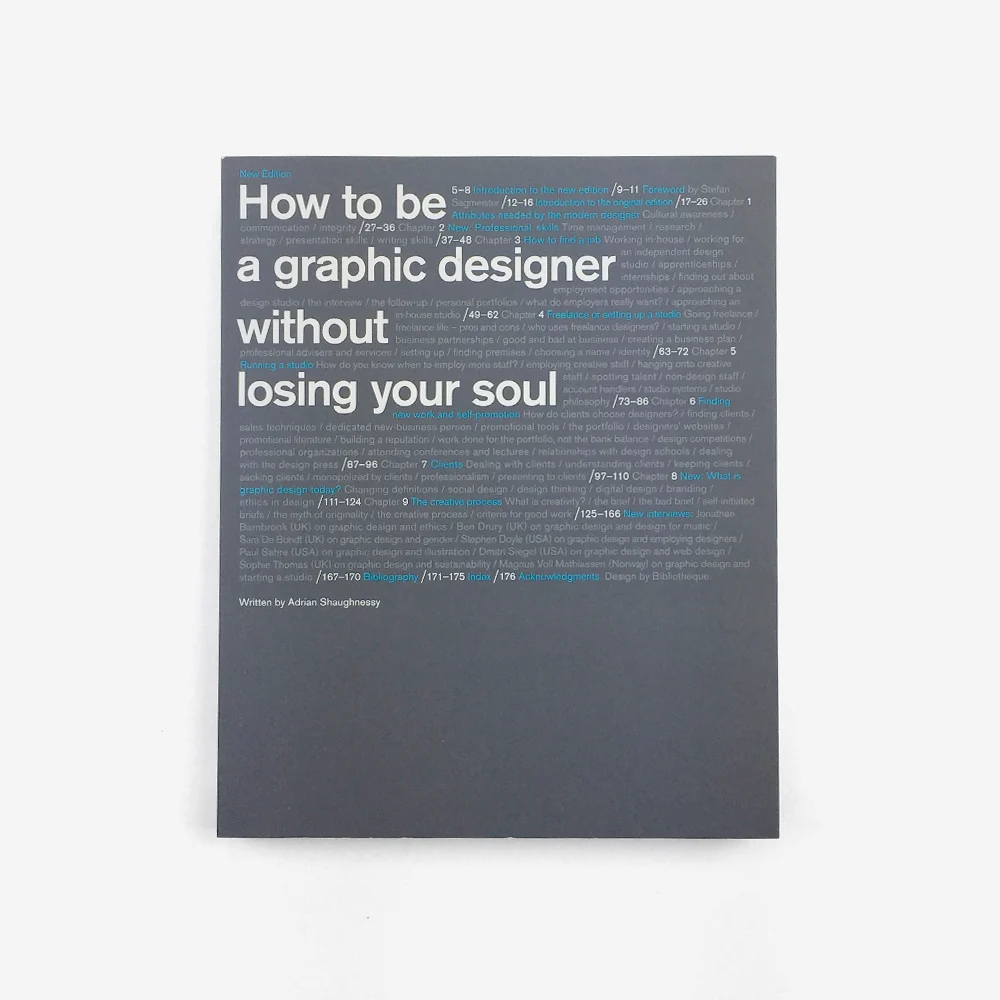
It’s also important not to compare yourself to design studios. Adrian Shaughnessy puts it well in How to Be a Graphic Designer Without Losing Your Soul: freelancers can charge less than studios, simply because studios are bigger, busier, and things move slower there. But studios have one thing going for them, division of labor. Someone’s job is to chase new clients. Someone else handles the seminars, the festivals. As a freelancer, that’s all on you. So don’t skip out on entering awards, they’re one of the best ways to get noticed when you don’t have a team behind you.
Aygen also highlights that a lot of people get confused about freelancing, and assume it means going completely solo. However, it still means working with other creatives, picking up projects through agencies and studios. So you always need to stay active in the field. Unfortunately, being creative doesn’t cut it for freelance work. You also need the skills of a marketing team to promote yourself, and the instincts of a salesperson to close the deal with a client.
Studios work with freelancers for many different reasons. Dada Projects, a female-led 3D motion studio based in London, says they usually bring in freelancers for one of two reasons: either they need to scale up their team for a specific project, or they need a skill they don’t already have in-house.
Take Forth+Back, a boutique studio from LA you might know from their work for Jordan. They work with freelancers all the time, so they know what to look for. They value the people they’ve already worked with, since they know how everyone works together. But the right fit changes from project to project. Specialists like font engineers, 3D and render artists, illustrators and web developers are always in demand for those task-specific roles. And when projects move this fast, a strong, varied freelance roster is a must. So if you’re going freelance, don’t try to do it all alone. Look at your favorite studios and see if there’s a fit.
This is why networking matters when you’re freelancing, more than you could imagine. And it’s not even just about clients. Other designers and creative people can introduce you to new collaborations, understand what you’re going through, and actually have suggestions worth hearing. For Dada Projects, working with freelancers has another advantage: many of them have already worked with different studios, so they bring plenty of fresh experience and knowledge with them.
If you’re a designer trying to decide whether to go freelance, or you’re already one, know that you’re not alone. Things do get easier, as long as you put in the effort. So, good luck!
Another thing you’ll have to figure out: how to reach new clients. Plenty of platforms out there claim to help. But you’re not the only one fishing in that pool. Somewhere out there, another designer will do the same job for less, maybe because their cost of living lets them, maybe because they’re not actually putting in the work, just cutting corners to land the client.
It’s also important not to compare yourself to design studios. Adrian Shaughnessy puts it well in How to Be a Graphic Designer Without Losing Your Soul: freelancers can charge less than studios, simply because studios are bigger, busier, and things move slower there. But studios have one thing going for them, division of labor. Someone’s job is to chase new clients. Someone else handles the seminars, the festivals. As a freelancer, that’s all on you. So don’t skip out on entering awards, they’re one of the best ways to get noticed when you don’t have a team behind you.
Aygen also highlights that a lot of people get confused about freelancing, and assume it means going completely solo. However, it still means working with other creatives, picking up projects through agencies and studios. So you always need to stay active in the field. Unfortunately, being creative doesn’t cut it for freelance work. You also need the skills of a marketing team to promote yourself, and the instincts of a salesperson to close the deal with a client.
Studios work with freelancers for many different reasons. DaDa Projects, a female-led 3D motion studio based in London, says they usually bring in freelancers for one of two reasons: either they need to scale up their team for a specific project, or they need a skill they don’t already have in-house.
Take Forth+Back, a boutique studio from LA you might know from their work for Jordan. They work with freelancers all the time, so they know what to look for. They value the people they’ve already worked with, since they know how everyone works together. But the right fit changes from project to project. Specialists like font engineers, 3D and render artists, illustrators and web developers are always in demand for those task-specific roles. And when projects move this fast, a strong, varied freelance roster is a must. So if you’re going freelance, don’t try to do it all alone. Look at your favorite studios and see if there’s a fit.
This is why networking matters when you’re freelancing, more than you could imagine. And it’s not even just about clients. Other designers and creative people can introduce you to new collaborations, understand what you’re going through, and actually have suggestions worth hearing. For example, DaDa Projects, one particular advantage is that many freelancers already work with different studios, so they bring a wealth of fresh experience and knowledge with them.
If you’re a designer stuck in the dilemma of becoming a freelancer, or already are one, know that you’re not alone. But things get easier as long as you put in the effort. So, good luck!