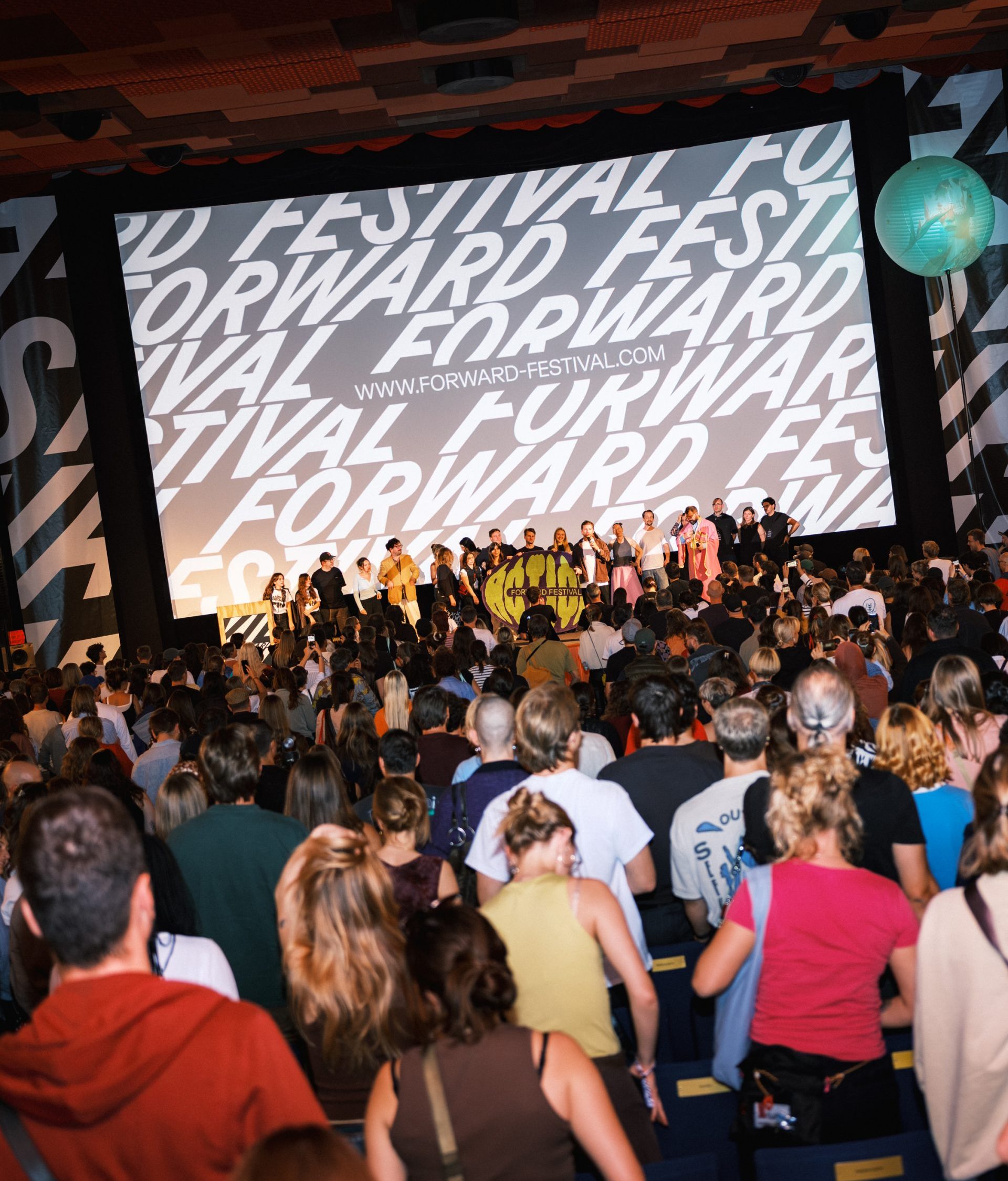
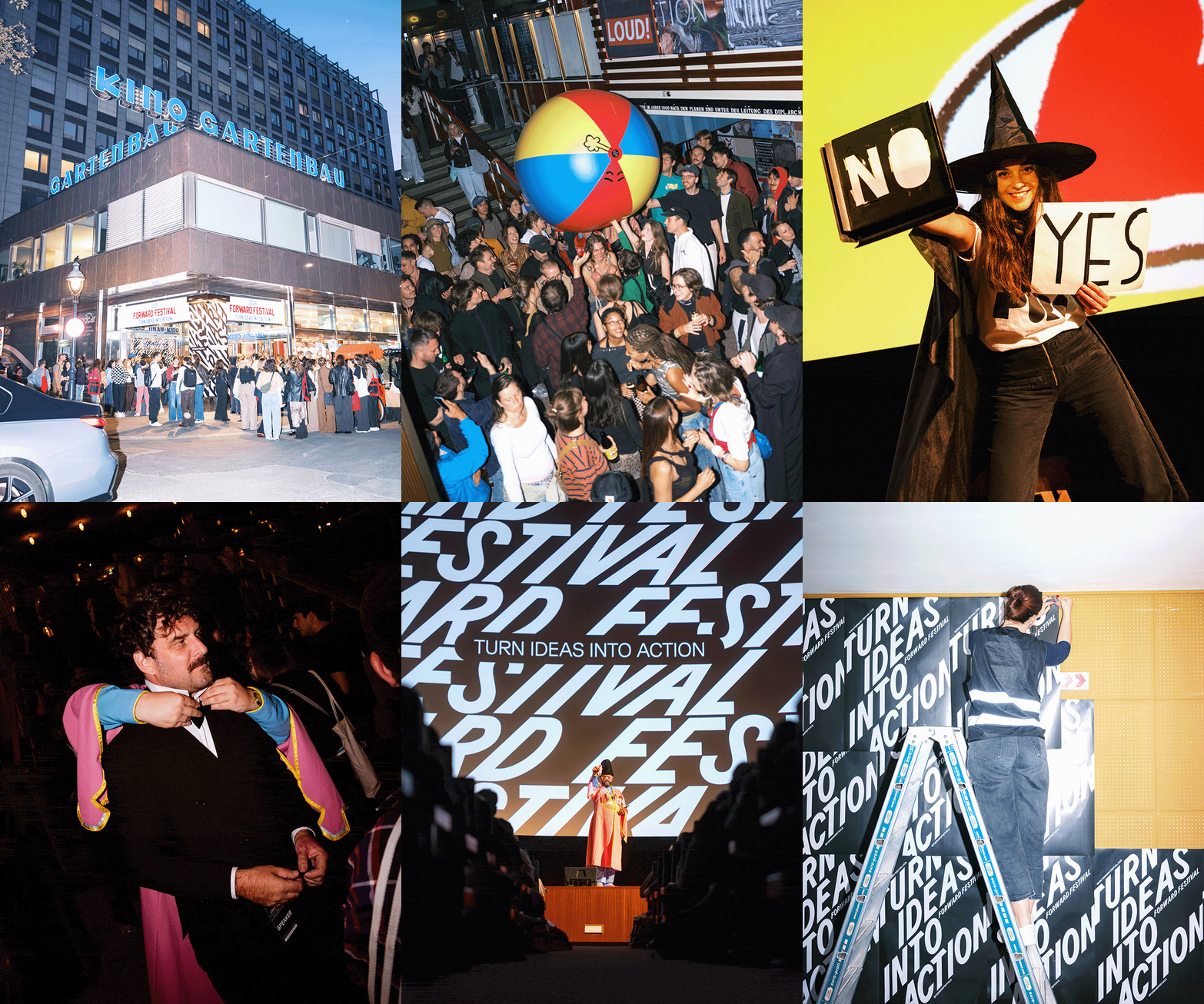
Forward Festival was born in Vienna in 2015 and has since become a fixed date on Europe’s design calendar, touring from Zurich to Amsterdam. This year’s stops: Frankfurt, then Berlin. Last one, back home in Vienna to close the year. Creatives from all over the world gather to hear from the studios, artists and designers whose work they follow, and to find out what happens behind closed doors. After all, if you get the chance to hear a designer explain how a misspelling ended up in one of Wes Anderson’s famously detail-obsessed films, or how an artist turns photography into something you experience with every sense, you don’t think twice. So the format is simple. Work you love, and the people who made it. Turn ideas into action. And by the end, it’s your turn.
You probably know the feeling. You walk into a room full of people whose work you’ve been saving on Behance and Instagram for years, you want to talk to them, but you’re not sure when or how. Forward Festival broke the ice fast. The talks opened with a nudge to turn around and say hi to the people next to us. Then Giorgi Avaliani, a creative director from Georgia, stepped on stage, made a few jokes about design, and we were ready to go.
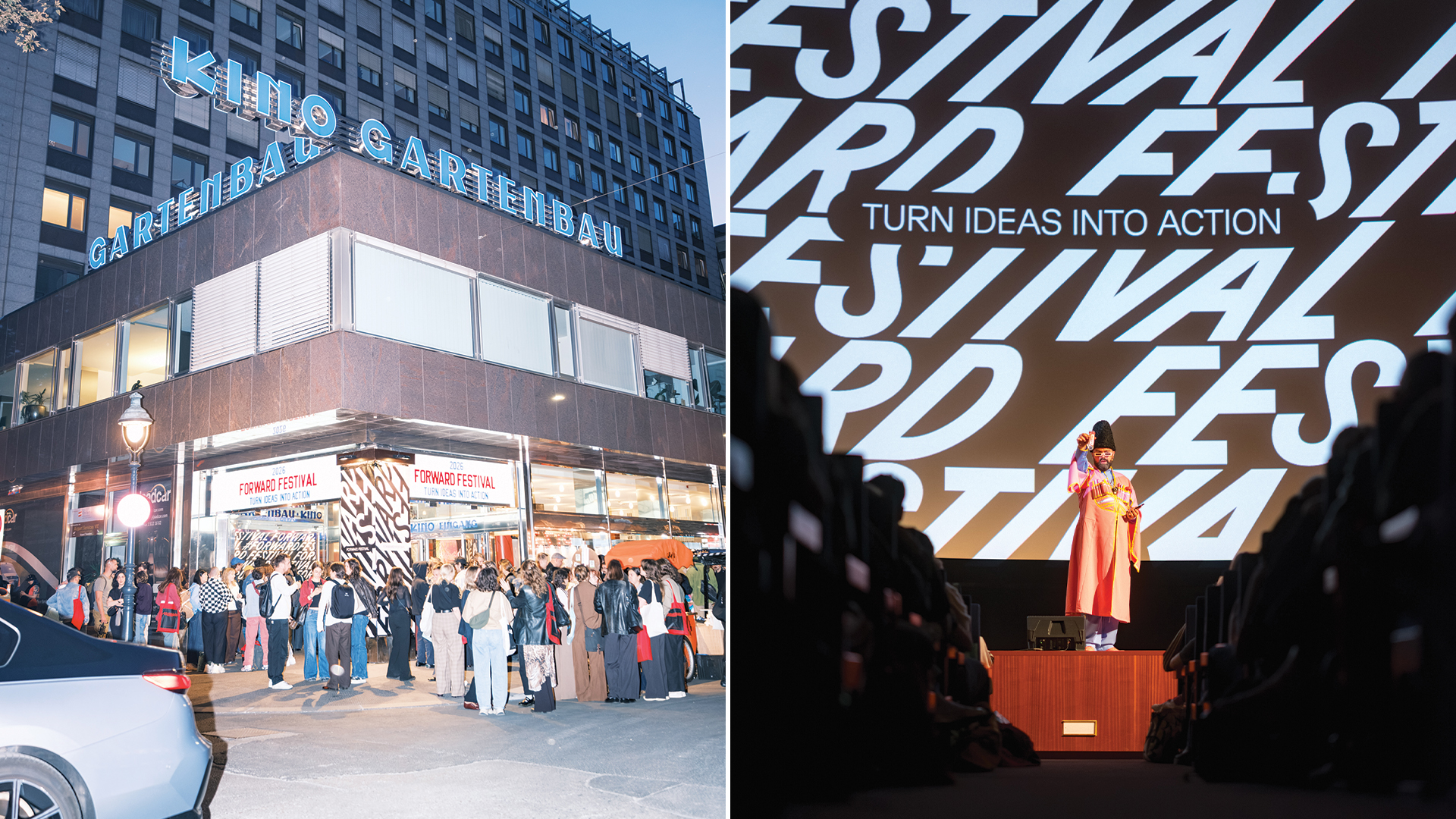
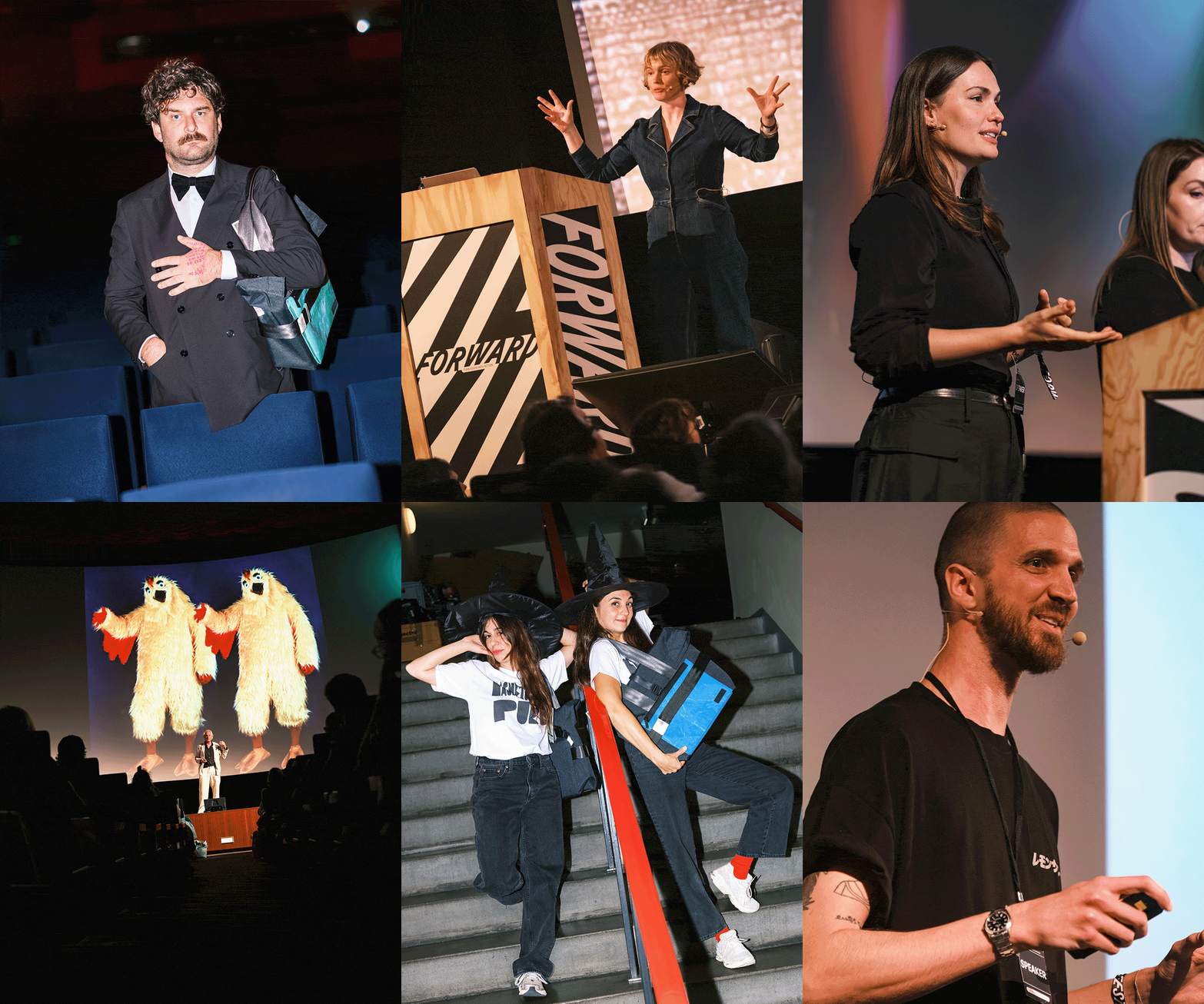
The speakers were there to show how they turned their thinking into action, just as the festival’s motto promises, and the lineup was hard to ignore: Annie Atkins, Erik Kessels, Jim Stoten and Cachetejack, among others. Across the two days, there were workshops, a creative lunch, parties, and the occasional drink with the people who had just been on stage.
Of course, the heart of the festival was the talks. Among the first to catch our attention was HFA Studio, a Viennese studio we’d already spotted around town while sipping their lemon sour. As they took us behind the scenes, it was nice to see how their thinking carried through to the final work, like a wine label designed as a postcard, presenting the wine as something meant to travel the world. And the story of how they were among the people who sent President Trump a piece of the Berlin Wall, as a reminder of how walls have torn families and friends apart, was proof that creative work is more than just a good look.
London’s creative studio DaDa Projects had a simple message: stop waiting for the creative world to look the way you want it, and build it yourself. They clearly live by it, with a portfolio full of inventive work for brands like Swatch, including its Scubaqua collection.
Annie Atkins showed us how to laugh at our own mistakes. She’s a famously detail-obsessed paper prop designer, known for her work on The Grand Budapest Hotel and Indiana Jones. Yet even she has slipped up, from the number of stars on a historical American flag to the wrong date. As creatives, sometimes it’s better to just laugh it off and not lose sleep over it.
What stayed with us most was how honest everyone was when the conversation turned to failure and boredom. We’re used to hearing success narratives with a small dip in the middle and plenty of highs. So it was nice to hear stories that didn’t skip the low points.
The speakers were there to show how they turned their thinking into action, just as the festival’s motto promises, and the lineup was hard to ignore: Annie Atkins, Erik Kessels, Jim Stoten and Cachetejack, among others. Across the two days, there were workshops, a creative lunch, parties, and the occasional drink with the people who had just been on stage.
Of course, the heart of the festival was the talks. Among the first to catch our attention was HFA Studio, a Viennese studio we’d already spotted around town while sipping their lemon sour. As they took us behind the scenes, it was nice to see how their thinking carried through to the final work, like a wine label designed as a postcard, presenting the wine as something meant to travel the world. And the story of how they were among the people who sent President Trump a piece of the Berlin Wall, as a reminder of how walls have torn families and friends apart, was proof that creative work is more than just a good look.
London’s creative studio DaDa Projects had a simple message: stop waiting for the creative world to look the way you want it, and build it yourself. They clearly live by it, with a portfolio full of inventive work for brands like Swatch, including its Scubaqua collection.
Annie Atkins showed us how to laugh at our own mistakes. She’s a famously detail-obsessed paper prop designer, known for her work on The Grand Budapest Hotel and Indiana Jones. Yet even she has slipped up, from the number of stars on a historical American flag to the wrong date. As creatives, sometimes it’s better to just laugh it off and not lose sleep over it.
What stayed with us most was how honest everyone was when the conversation turned to failure and boredom. We’re used to hearing success narratives with a small dip in the middle and plenty of highs. So it was nice to hear stories that didn’t skip the low points.
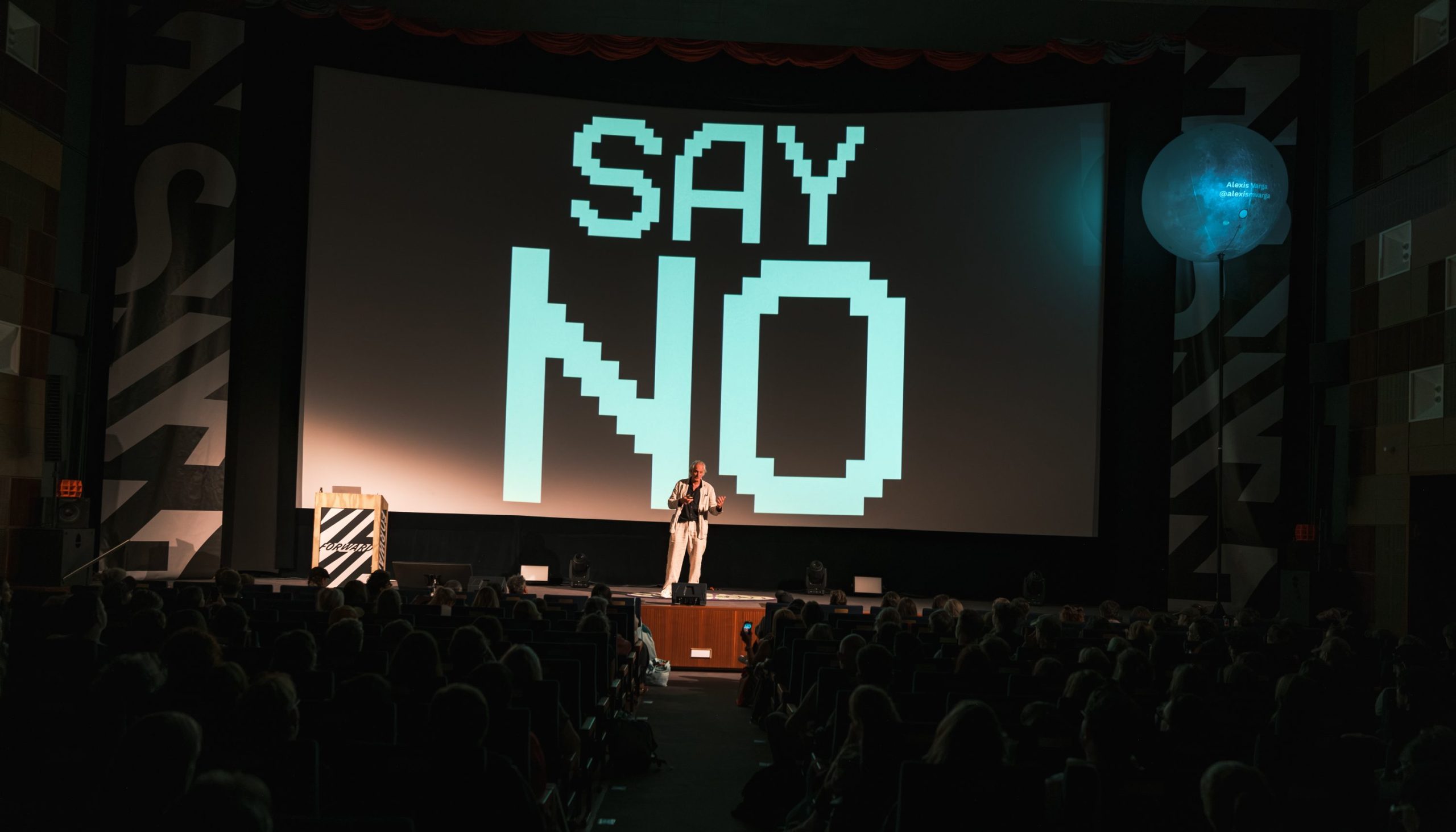
Honestly, Jim Stoten and Erik Kessels each deserve an article of their own. Stoten showed us how his boredom turned into a video series that got more attention than many of the illustrations he’d poured so much effort into. His tuxedo was sharp, and his dance was the perfect closing act. Kessels, on the other hand, is one of the most fun artists and curators we’ve seen in a long time. If your way of turning ideas into action is a little more unusual than most, he’s your go-to guy. Few creatives play with ideas as unconventionally as Kessels, and marketing is where he truly shines. Case in point: I amsterdam. His studio KesselsKramer landed the city branding with a bold move, buying the rights to the concept while other studios were still pitching the same idea.
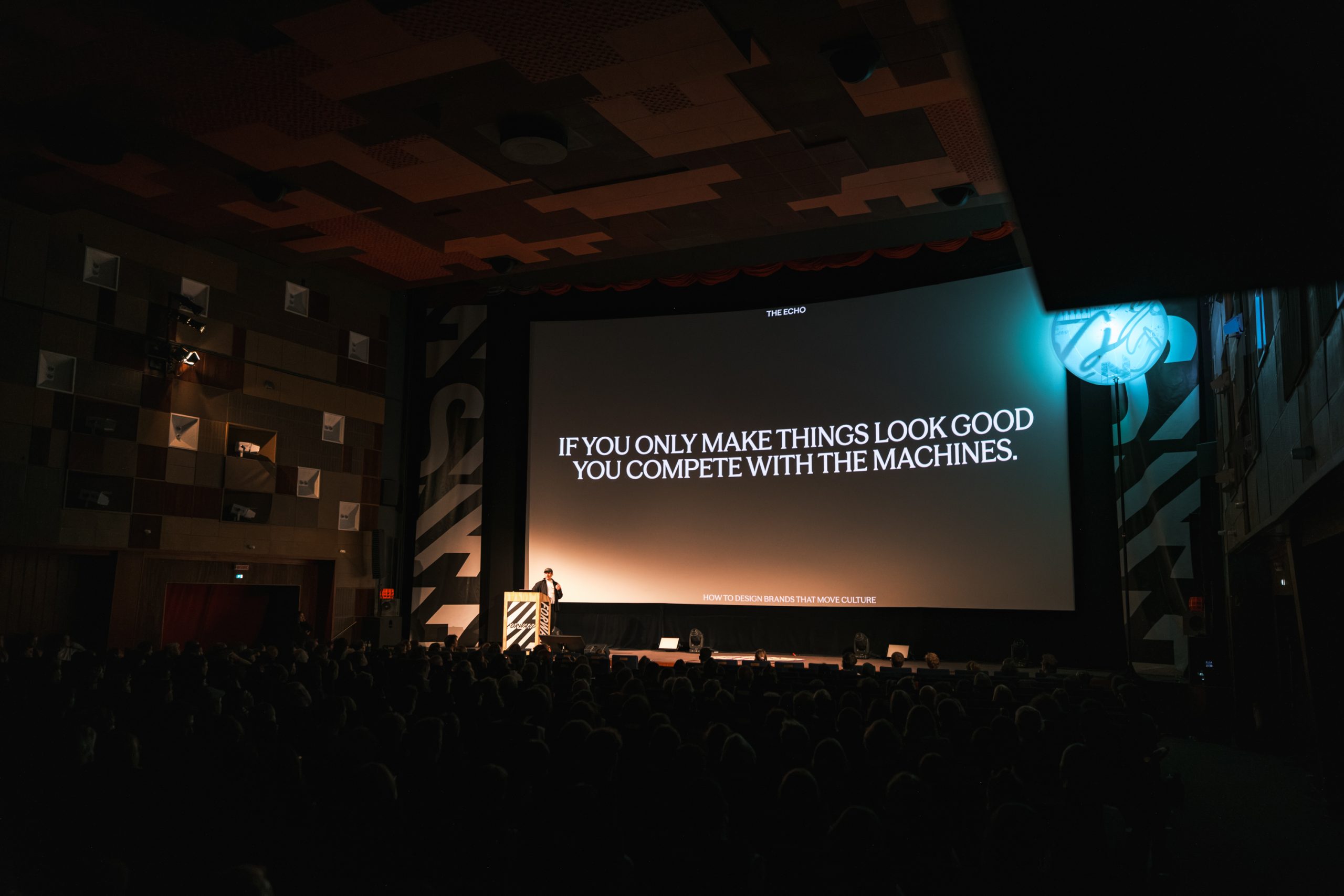
Moreover, Studio Herrström, a design studio focused on culture across music, tech and entertainment, with an uncomfortable truth. The moment we open Pinterest for inspiration, we become its victims. As he put it, playing it safe leads to a “sea of sameness”, where projects start to look just like each other. But there’s a way out. And according to Herrström, it’s a lot more fun.
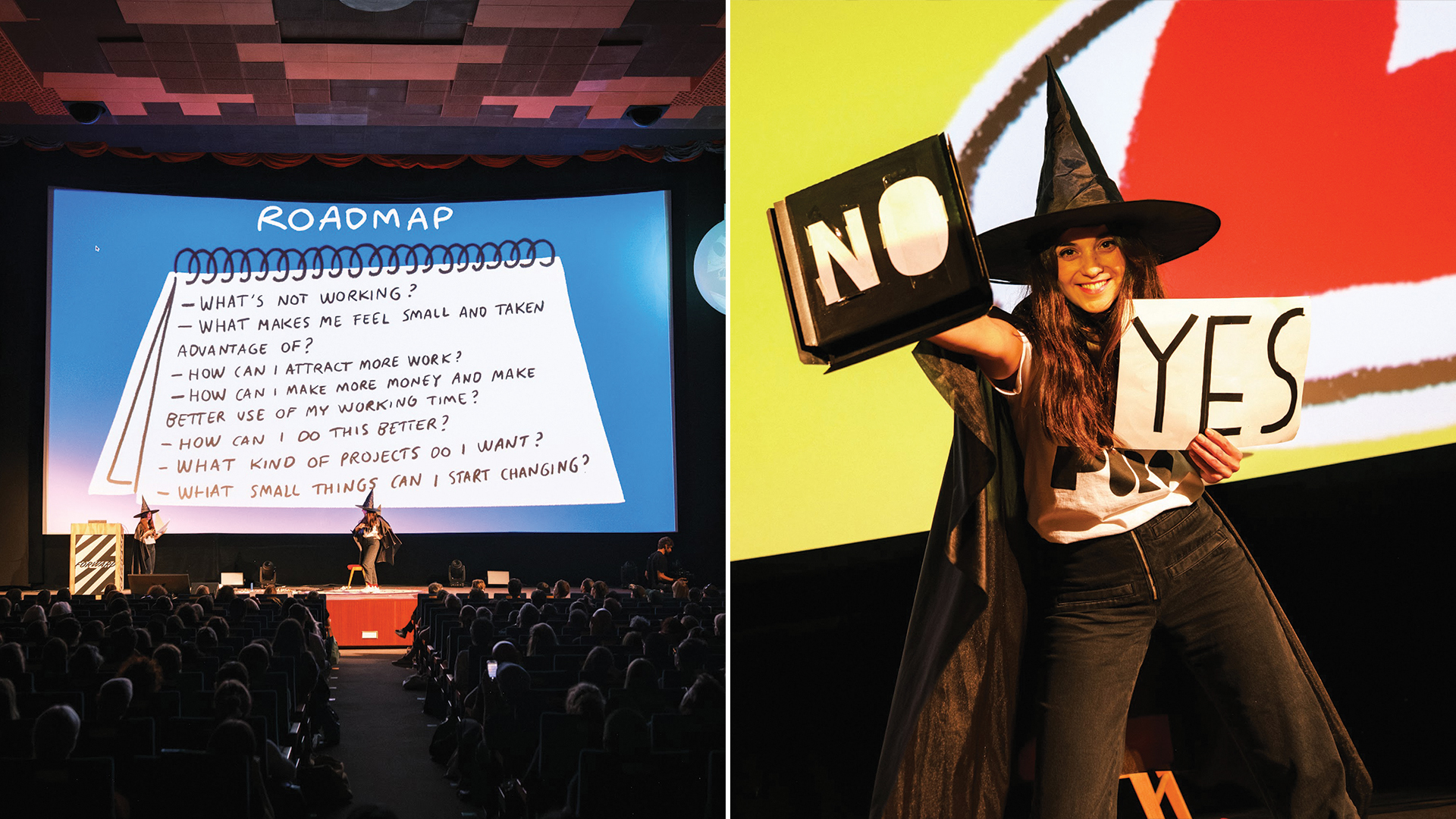
Before we wrap up, we need to talk about the two witches of the scene: Nuria Bellver and Raquel Fanjul of Cachetejack. They’ve been working together since university and describe each other as soulmates, which is why they believe finding the right person to work with matters so much. Long before the big brands and bigger budgets, they were just two graduates fresh out of college, working for free or for very little to get their foot in the door. And the good news? They made it.
We know that even the job you’ve dreamed of since you were a kid can start to feel monotonous. It’s easy to get lost in revisions, deadlines, and technical tools. Yet Forward Festival is here to remind us that boredom, mistakes, and a bit of handwork can be exactly where good ideas start, and that it pays to stay close to your own work, even when it feels slow or uncertain. So now it’s our turn to stop waiting for the perfect moment and start turning ideas into action.