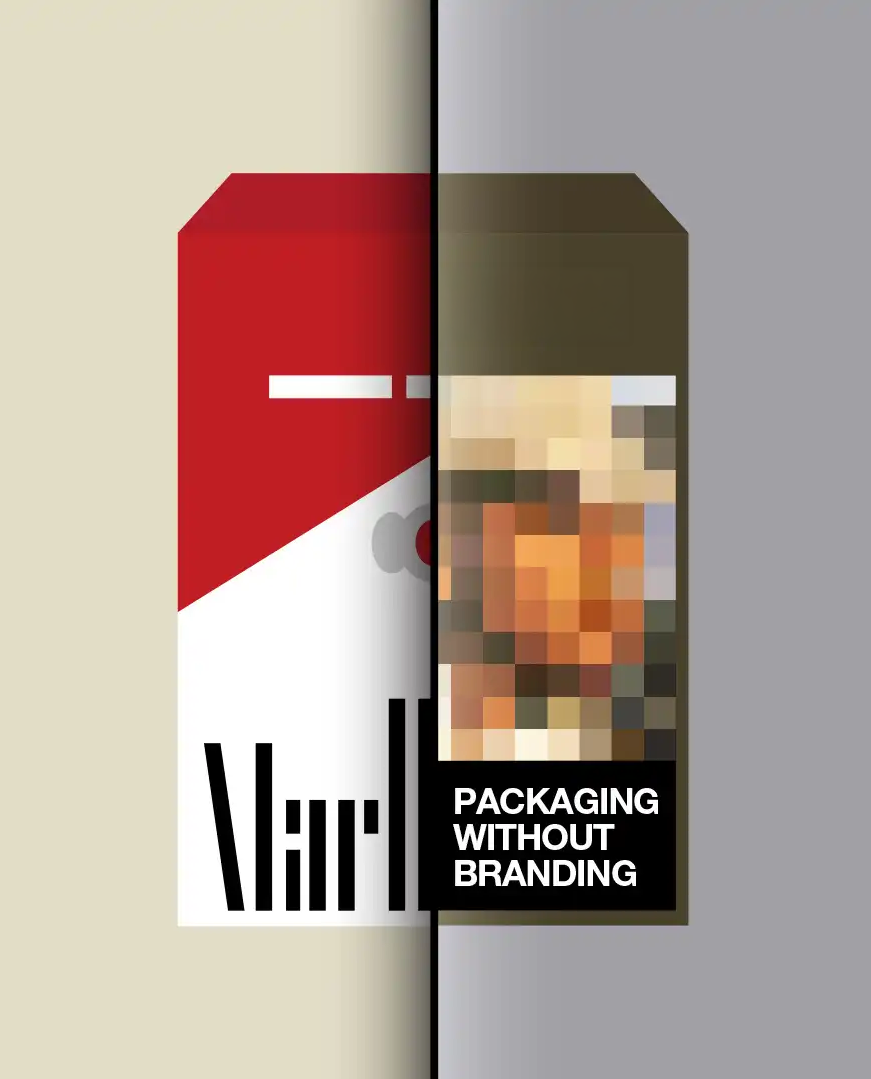
You’ve probably noticed it. Celebrities lighting cigarettes in the front row of fashion shows. Posting while they smoke, more than ever. A curious person could even question if they’re trying to make it popular again. But even if so, could it work? Look at Juul. Supermodels made it look cool, and that’s part of what got it killed by the FDA. Now tobacco can’t even legally have packaging. So here’s the real question. Cigarette marketing built an entire culture once. Can it survive with none of the tools that built it?
For decades, non-profit and health organizations have fought against the wealthiest and most influential companies, Philip Morris International, Altria, British American Tobacco, Imperial Brands, and Japan Tobacco International, to convince governments to take action.
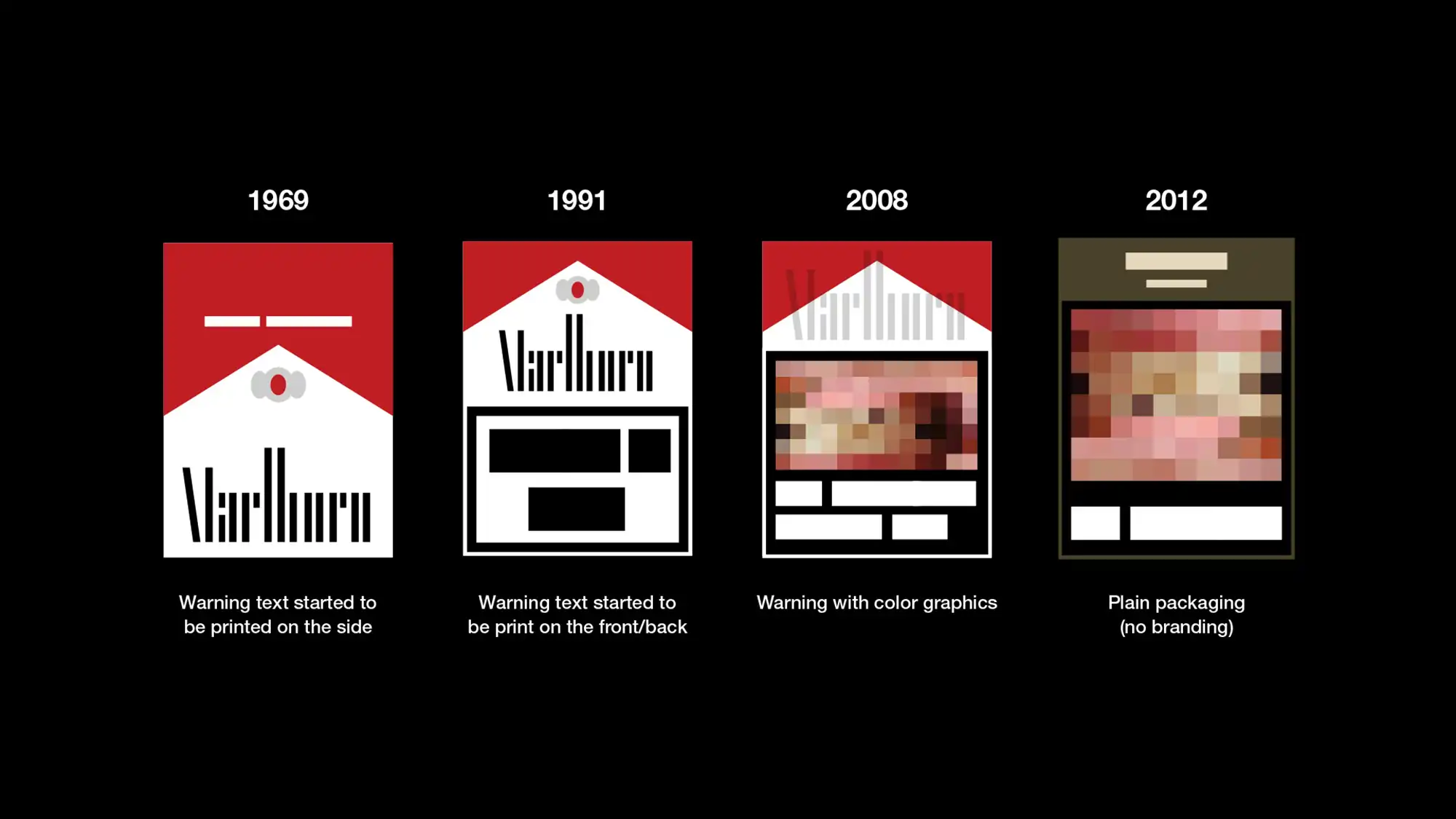
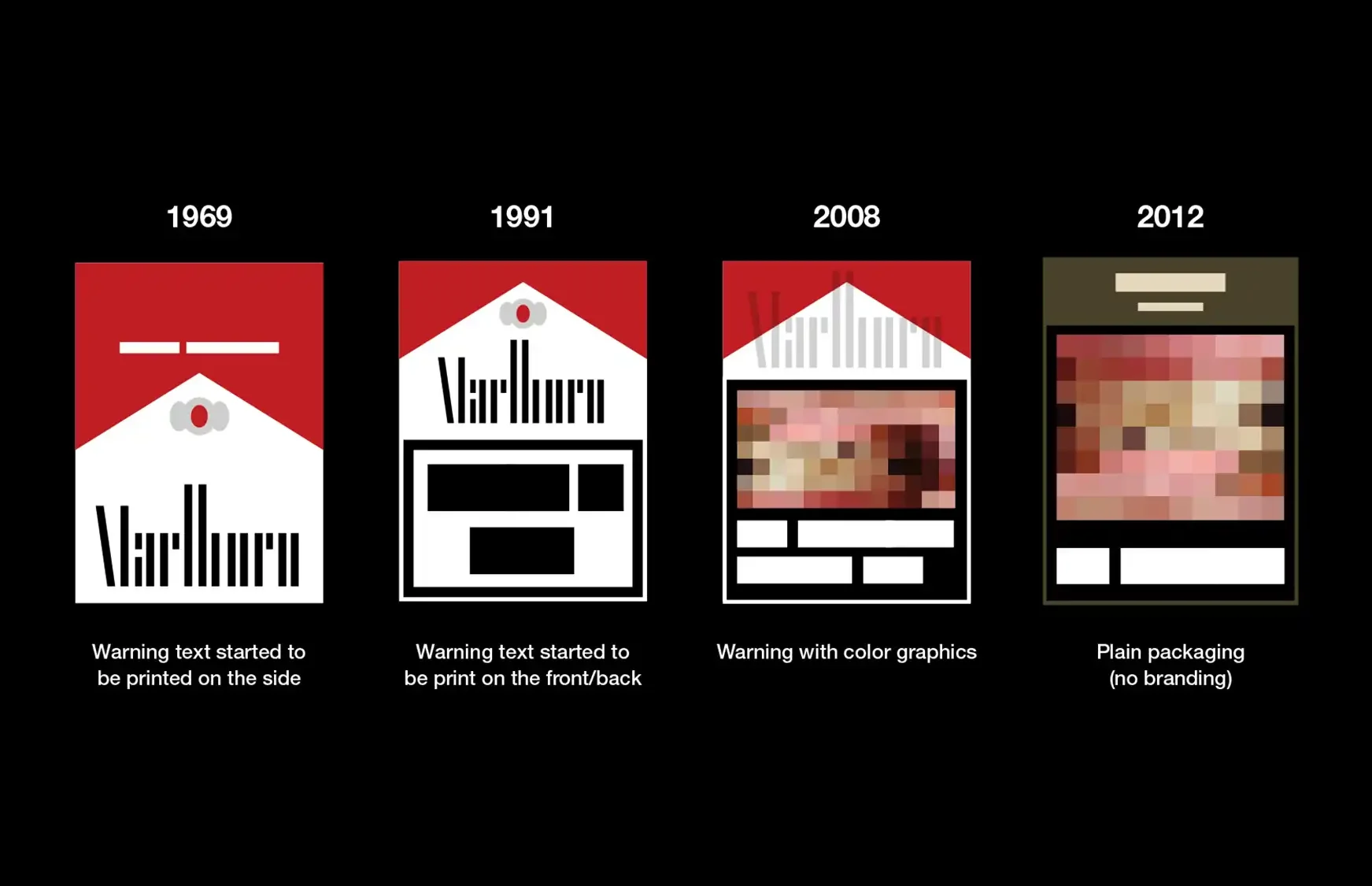
Thanks to those who care about humanity, first, all the ads are banned, then the warning texts are included. Later we started to see pictures of smoking-related diseases, pictures which are much greater than text-only warnings. These pictorial warnings are necessary for the huge number of illiterate population of the world to inform them about the health hazards of smoking. And then, tobacco companies lost their last weapon; their brandings.
There’s lots of evidence that their packaging entices young people into smoking with its flashy logos and colors. Moreover, the tobacco industry’s documents show they have invested lots of money on their visual branding and packaging to recruit young people to start smoking their products. Neither the less, they are pushing insanely flavored cigarettes with mint, cherry, berry, etc., to make it more attractive to the young generation! But a new era has already begun.
Led by Australia, as of October 2020, 17 countries have adopted plain packaging: Australia, Canada, France, Ireland, Israel, New Zealand, Norway, Saudi Arabia, Singapore, Slovenia, Thailand, Türkiye, UK, Uruguay, Belgium, Hungary, and the Netherlands. Many more have progressed plain packaging laws and regulations to varying extents. And now, take countries like the Maldives, who’ve gone all in and banned cigarettes generationally. Anyone born after January 1, 2007 can’t buy a cigarette there. The UK’s got a similar proposal in the works.
You’ve probably noticed it. Celebrities lighting cigarettes in the front row of fashion shows. Posting while they smoke, more than ever. A curious person could even question if they’re trying to make it popular again. But even if so, could it work? Look at Juul. Supermodels made it look cool, and that’s part of what got it killed by the FDA. Now tobacco can’t even legally have packaging. So here’s the real question. Cigarette marketing built an entire culture once. Can it survive with none of the tools that built it?
For decades, non-profit and health organizations have fought against the wealthiest and most influential companies, Philip Morris International, Altria, British American Tobacco, Imperial Brands, and Japan Tobacco International, to convince governments to take action.
Thanks to those who care about humanity, first, all the ads are banned, then the warning texts are included. Later we started to see pictures of smoking-related diseases, pictures which are much greater than text-only warnings. These pictorial warnings are necessary for the huge number of illiterate population of the world to inform them about the health hazards of smoking. And then, tobacco companies lost their last weapon; their brandings.
There’s lots of evidence that their packaging entices young people into smoking with its flashy logos and colors. Moreover, the tobacco industry’s documents show they have invested lots of money on their visual branding and packaging to recruit young people to start smoking their products. Neither the less, they are pushing insanely flavored cigarettes with mint, cherry, berry, etc., to make it more attractive to the young generation! But a new era has already begun.
Led by Australia, as of October 2020, 17 countries have adopted plain packaging: Australia, Canada, France, Ireland, Israel, New Zealand, Norway, Saudi Arabia, Singapore, Slovenia, Thailand, Türkiye, UK, Uruguay, Belgium, Hungary, and the Netherlands. Many more have progressed plain packaging laws and regulations to varying extents. And now, take countries like the Maldives, who’ve gone all in and banned cigarettes generationally. Anyone born after January 1, 2007 can’t buy a cigarette there. The UK’s got a similar proposal in the works.
While the argument about the regulations against the tobacco business still continues, we would like to highlight one of the most extensive and successful ad campaigns to show how powerful the correct branding positioning and branding strategy can be.
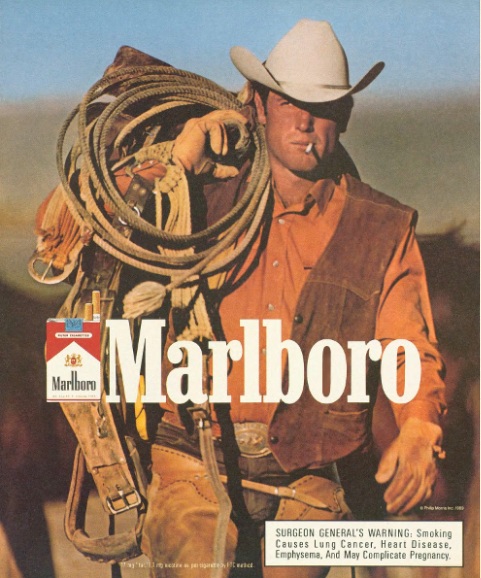
Thanks to their successful branding and advertisement campaign of Marlboro Man, the brand has a powerful image of being the cigarette for the real man. The brain of this campaign was Leo Burnett, who is the founder of one of the most prominent advertisement companies, Leo Burnett Company. He repositioned the brand, which is founded as a women’s cigarette, into one of the most rugged masculine products in history. The Marlboro Man campaign made Marlboro the world’s top-selling cigarette in 1972, and it never lost that spot. Forbes reported that in 2020, Marlboro still made up more than 43 percent of every cigarette bought in the US.
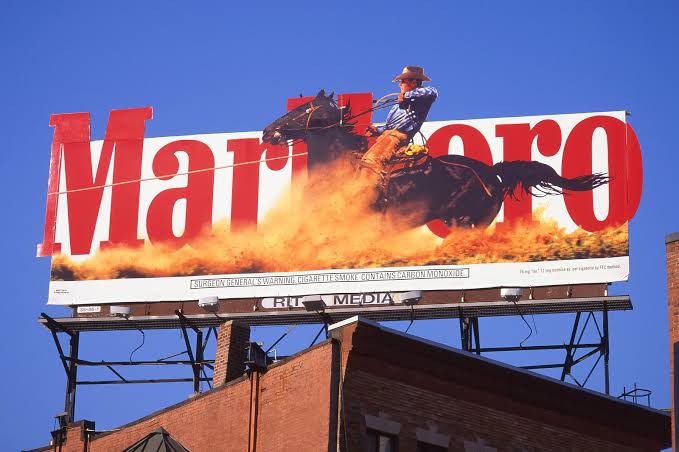
“In a world that was becoming increasingly complex and frustrating for the ordinary man, the cowboy represented an antithesis, a man whose environment was simplistic and relatively pressure-free. He was his own man in a world he owned.” – Jack Landry.
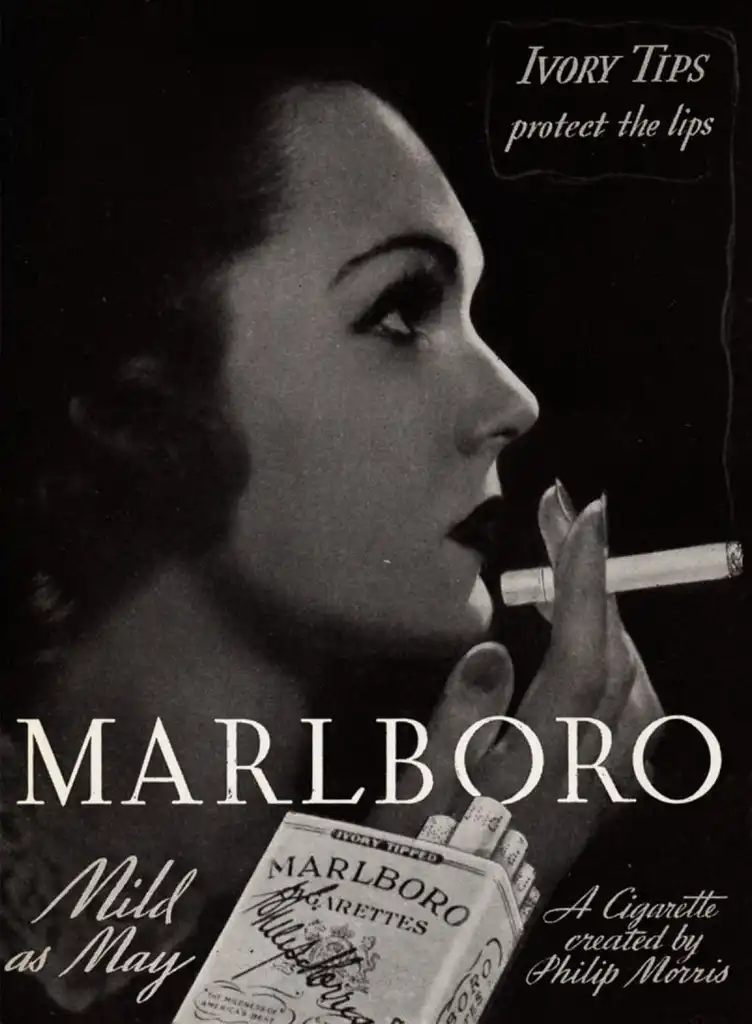
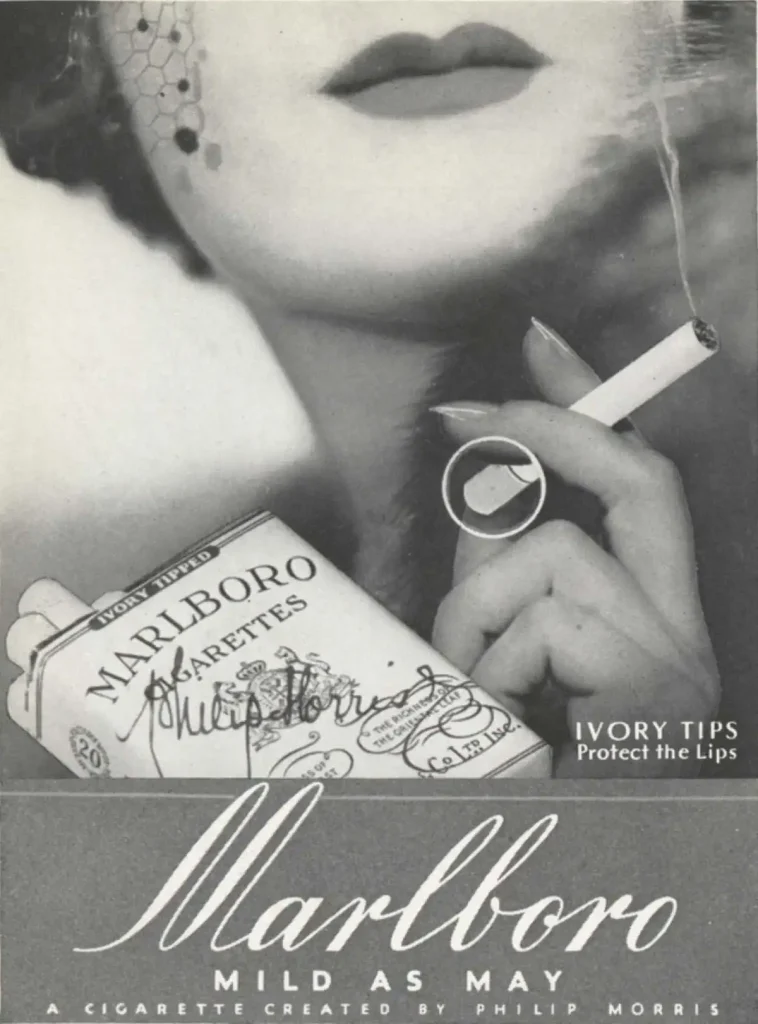
Prior to the cowboy campaign, Marlboro was considered a “women’s” cigarette. Their debut slogan in 1924 was “Mild As May” Early ads presented black-and-white sketches of listless flappers, slouched over an ashtray at a bistro table, or a sultry profile of a Gibson girl whose dark lipstick remained unblemished after a drag.
However, research shows that more women smoke Marlboro than any other brand instead of all the Marlboro Man ad campaign attempts. So despite Phillip Morris’ attempt to create advertising that appealed to men, they ended up drawing in women, too, which means that the Marlboro Man campaign wasn’t about being a man after all: it was about being American, and maybe more specifically, a white American. Within a year of Marlboro Man’s debut, the company went from holding only a one percent market share to being the fourth bestselling brand in America. Moreover, America loved Marlboros: Sales hit $5 billion in 1955, an over 3000 percent increase over 1954, the year before the Marlboro Man campaign.
While the argument about the regulations against the tobacco business still continues, we would like to highlight one of the most extensive and successful ad campaigns to show how powerful the correct branding positioning and branding strategy can be.
Thanks to their successful branding and advertisement campaign of Marlboro Man, the brand has a powerful image of being the cigarette for the real man. The brain of this campaign was Leo Burnett, who is the founder of one of the most prominent advertisement companies, Leo Burnett Company. He repositioned the brand, which is founded as a women’s cigarette, into one of the most rugged masculine products in history. The Marlboro Man campaign made Marlboro the world’s top-selling cigarette in 1972, and it never lost that spot. Forbes reported that in 2020, Marlboro still made up more than 43 percent of every cigarette bought in the US.
“In a world that was becoming increasingly complex and frustrating for the ordinary man, the cowboy represented an antithesis, a man whose environment was simplistic and relatively pressure-free. He was his own man in a world he owned.” – Jack Landry.
Prior to the cowboy campaign, Marlboro was considered a “women’s” cigarette. Their debut slogan in 1924 was “Mild As May.” Early ads presented black-and-white sketches of listless flappers, slouched over an ashtray at a bistro table, or a sultry profile of a Gibson girl whose dark lipstick remained unblemished after a drag.
“The Marlboro Man stood as an iconic symbol, an individual in control of his destiny. He was a reassuring figure at the height of our fear of nuclear annihilation and a conservative counter to changing values.”
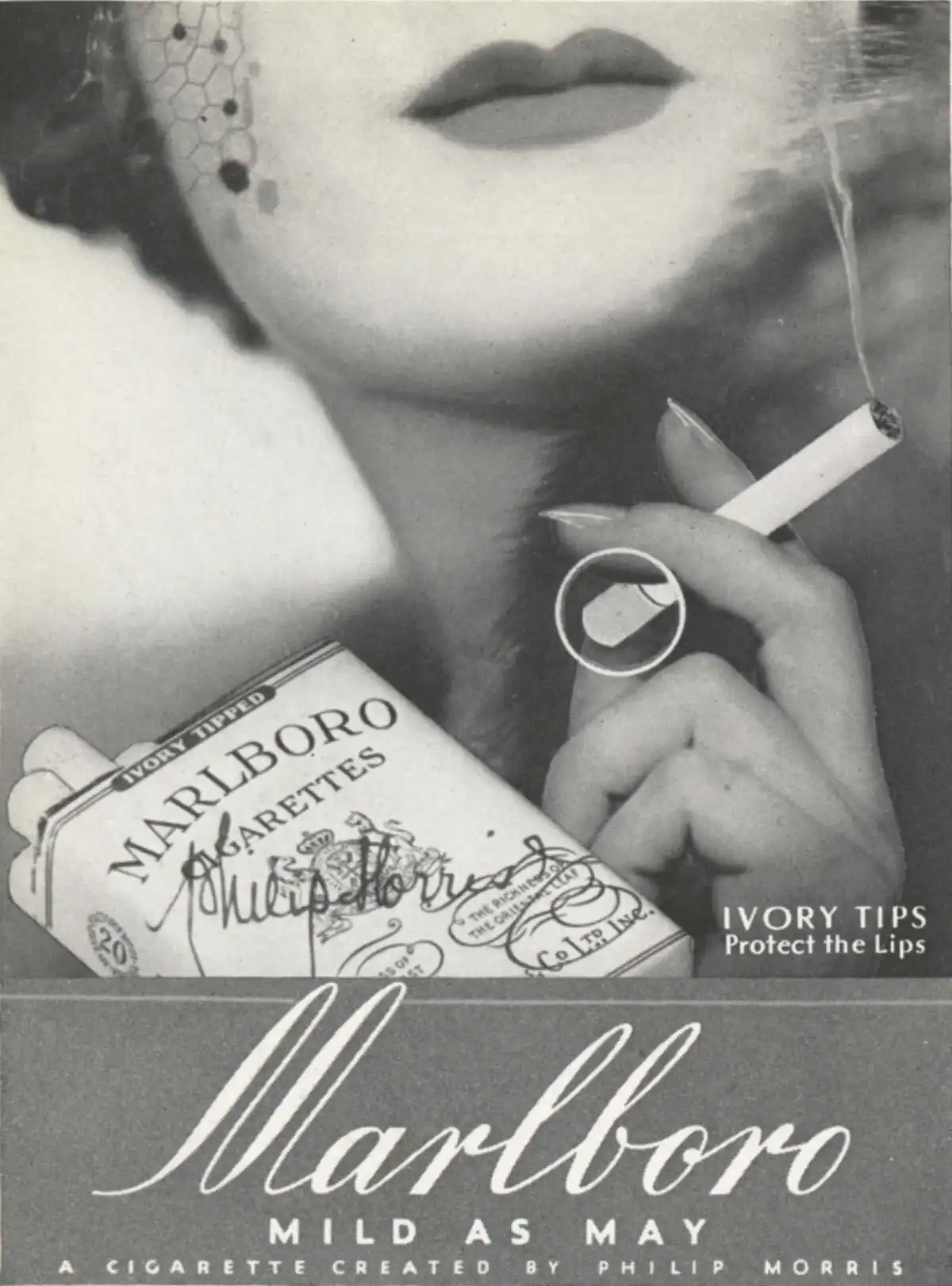
However, research shows that more women smoke Marlboro than any other brand instead of all the Marlboro Man ad campaign attempts. So despite Phillip Morris’ attempt to create advertising that appealed to men, they ended up drawing in women, too, which means that the Marlboro Man campaign wasn’t about being a man after all: it was about being American, and maybe more specifically, a white American. Within a year of Marlboro Man’s debut, the company went from holding only a one percent market share to being the fourth bestselling brand in America. Moreover, America loved Marlboros: Sales hit $5 billion in 1955, an over 3000 percent increase over 1954, the year before the Marlboro Man campaign.
“The Marlboro Man stood as an iconic symbol, an individual in control of his destiny. He was a reassuring figure at the height of our fear of nuclear annihilation and a conservative counter to changing values.”
All these steps, with probably more on the way, might finally be tobacco’s endgame.
“The Marlboro Man stood as an iconic symbol, an individual in control of his destiny. He was a reassuring figure at the height of our fear of nuclear annihilation and a conservative counter to changing values.”
All these steps, with probably more on the way, might finally be tobacco’s endgame.